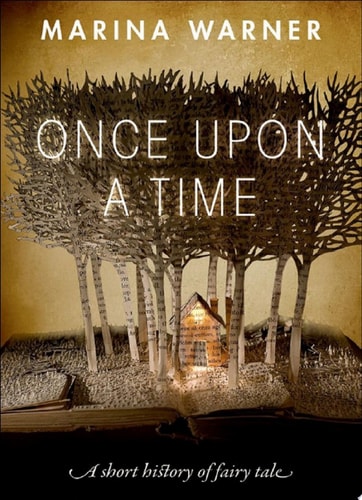
Once Upon a Time: A Short History of Fairy Tale
0
0
As an Amazon Associate and affiliate partner, Menrva Books earns from qualifying purchases. Learn more
Author Description
From wicked queens, beautiful princesses, elves, monsters, and goblins to giants, glass slippers, poisoned apples, magic keys, and mirrors, the characters and images of fairy tales have cast a spell over readers and audiences, both adults and children, for centuries. These fantastic stories have travelled across cultural borders, and been passed on from generation to generation, ever-changing, renewed with each re-telling. Few forms of literature have greater power to enchant us and rekindle our imagination than a fairy tale. But what is a fairy tale? Where do they come from and what do they mean? What do they try and communicate to us about morality, sexuality, and society? The range of fairy tales stretches across great distances and time; their history is entangled with folklore and myth, and their inspiration draws on ideas about nature and the supernatural, imagination and fantasy, psychoanalysis, and feminism. Marina Warner has loved fairy tales over a long writing life, and she explores here a multitude of tales through the ages, their different manifestations on the page, the stage, and the screen. From the phenomenal rise of Victorian and Edwardian literature to contemporary children's stories, Warner unfolds a glittering array of examples, from classics such as Red Riding Hood, Cinderella, and The Sleeping Beauty, the Grimm Brothers' Hansel and Gretel, and Hans Andersen's The Little Mermaid, to modern-day realizations including Walt Disney's Snow White and gothic interpretations such as Pan's Labyrinth. In ten succinct chapters, Marina Warner digs into a rich hoard of fairy tales in their brilliant and fantastical variations, in order to define a genre and evaluate a literary form that keeps shifting through time and history. Her book makes a persuasive case for fairy tale as a crucial repository of human understanding and culture.
Menrva's Summary
THE THESIS
This work investigates the origins, evolution, and cultural significance of the fairy tale as a persistent literary and social form. Marina Warner, a scholar and writer with extensive experience in the study of myth and folklore, utilizes a multidisciplinary framework to analyze how these narratives reflect shifting human values. She examines the intersection of these stories with psychoanalysis, feminism, and historical societal structures to argue that fairy tales serve as a vital repository of human understanding.
THE SCOPE MAP
What You Will Find
- Historical analysis of fairy tale evolution from oral tradition to modern media
- Examination of thematic elements including morality, sexuality, and social norms
- Comparative study of classic tales like Cinderella and Hansel and Gretel alongside modern adaptations like Pan's Labyrinth
- Exploration of the influence of Victorian and Edwardian literature on the genre
Scope Limits
- The text focuses primarily on Western manifestations of the genre
- It does not provide an exhaustive catalog of every global variant of these stories
THE AUTHORITY PERSPECTIVE
Experts recognize this text as a sophisticated and accessible overview of the genre's development. Readers frequently note the clarity of Warner's prose, which balances academic rigor with an engaging exploration of the subject matter.
Page Count:
225
Publication Date:
2014-01-01
Publisher:
OUP Oxford
ISBN-10:
0191028770
ISBN-13:
9780191028779
Fairy Tales
Literary Criticism
Folklore
Mythology
English & College Success
English
Cultural History