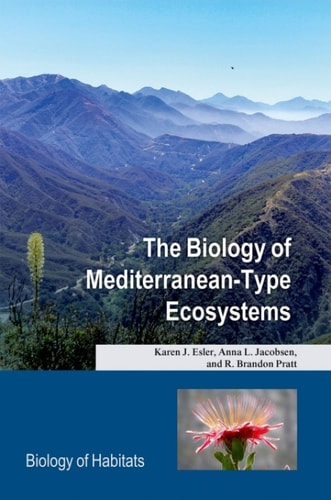
The Biology of Mediterranean-Type Ecosystems
0
0
As an Amazon Associate and affiliate partner, Menrva Books earns from qualifying purchases. Learn more
Author Description
The world's mediterranean-type climate regions (including areas within the Mediterranean, South Africa, Australia, California, and Chile) have long been of interest to biologists by virtue of their extraordinary biodiversity and the appearance of evolutionary convergence between these disparate regions. These regions contain many rare and endemic species. Their mild climate makes them appealing places to live and visit and this has resulted in numerous threats to the species and communities that occupy them. Threats include a wide range of factors such as habitat loss due to development and agriculture, disturbance, invasive species, and climate change. As a result, they continue to attract far more attention than their limited geographic area might suggest. This book provides a concise but comprehensive introduction to mediterranean-type ecosystems. It is an accessible text which provides an authoritative overview of the topic. As with other books in the Biology of Habitats Series, the emphasis in this book is on the organisms that dominate these regions although their management, conservation, and restoration are also considered.
Menrva's Summary
THE THESIS
This book investigates the ecological characteristics, evolutionary convergence, and conservation challenges inherent to mediterranean-type climate regions across the globe. The authors, Anna L. Jacobsen, Karen J. Esler, and R. Brandon Pratt, utilize a synthesis of biological data and environmental research to explain why these geographically disparate regions exhibit similar biodiversity patterns. The text establishes a framework for understanding how these unique habitats function and the anthropogenic pressures currently threatening their stability.
THE SCOPE MAP
What You Will Find
- Comparative analysis of mediterranean-type climates in California, Chile, South Africa, Australia, and the Mediterranean Basin
- Examination of evolutionary convergence and endemic species distribution
- Overview of management, restoration, and conservation strategies
- Analysis of threats including invasive species, land-use change, and climate shifts
Scope Limits
- Does not provide exhaustive species-level catalogs for every region
- Focuses primarily on ecological and biological processes rather than socio-political policy history
THE AUTHORITY PERSPECTIVE
Experts and academics recognize this text as a foundational, accessible overview of mediterranean-type ecosystems within the broader Biology of Habitats series. Readers frequently note the clarity of the prose, which balances technical biological detail with a comprehensive scope suitable for students and researchers alike.
Page Count:
336
Publication Date:
2018-01-01
Publisher:
OUP Oxford
ISBN-10:
019105965X
ISBN-13:
9780191059650
Science
Biology
Mediterranean Ecosystems
Ecology
Conservation