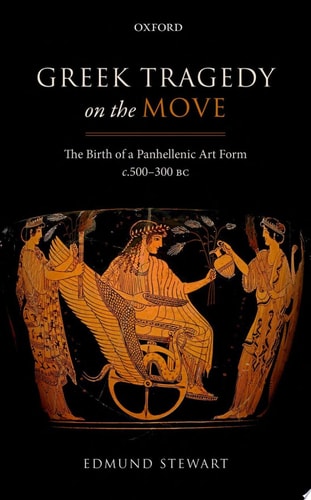
Greek Tragedy on the Move
0
0
As an Amazon Associate and affiliate partner, Menrva Books earns from qualifying purchases. Learn more
Author Description
Greek Tragedy Is One Of The Most Important Cultural Legacies Of The Classical World, With A Rich And Varied History And Reception, Yet It Appears To Have Its Roots In A Very Particular Place And Time. The Authors Of The Surviving Works Of Greek Tragic Drama-aeschylus, Sophocles, And Euripides-were All From One City, Athens, And All Lived In The Fifth Century Bc; Unsurprisingly, It Has Often Been Supposed That Tragic Drama Was Inherently Linked In Some Way To Fifth-century Athens And Its Democracy. Why Then Do We Refer To Tragedy As 'greek', Rather Than 'attic' Or 'athenian', As Some Scholars Have Argued? This Volume Argues That The Story Of Tragedy's Development And Dissemination Is Inherently One Of Travel And That Tragedy Grew Out Of, And Became Part Of, A Common Greek Culture, Rather Than Being Explicitly Athenian. Although Athens Was A Major Panhellenic Centre, By The Fifth Century A Well-established Network Of Festivals And Patrons Had Grown Up To Encompass Greek Cities And Sanctuaries From Sicily To Asia Minor And From North Africa To The Black Sea. The Movement Of Professional Poets, Actors, And Audience Members Along This Circuit Allowed For The Exchange Of Poetry In General And Tragedy In Particular, Which Came To Be Performed All Over The Greek World And Was Therefore A Panhellenic Phenomenon Even From The Time Of The Earliest Performances. The Stories That Were Dramatized Were Themselves Tales Of Travel-the Epic Journeys Of Heroes Such As Heracles, Jason, Or Orestes- And The Works Of The Tragedians Not Only Demonstrated How The Various Peoples Of Greece Were Connected Through The Wanderings Of Their Ancestors, But Also How These Connections Could Be Sustained By Travelling Poets And Their Acts Of Retelling.
Menrva's Summary
THE THESIS
This volume investigates whether Greek tragedy was an exclusively Athenian invention or a broader panhellenic phenomenon rooted in the movement of people and culture. Edmund Stewart, a scholar specializing in the history and culture of the ancient Greek world, challenges the traditional view that tragic drama was inextricably linked to fifth-century Athenian democracy. By analyzing the networks of festivals, patrons, and professional performers, he argues that tragedy functioned as a shared cultural practice that circulated throughout the Mediterranean long before it was codified as a strictly Athenian product.
THE SCOPE MAP
What You Will Find
- An analysis of the professional networks connecting poets, actors, and audiences across the Greek world.
- A re-examination of the geographic origins of tragic performance from Sicily to Asia Minor.
- An exploration of how the themes of travel and epic journeys in tragedy mirrored the physical movement of the performers themselves.
Scope Limits
- The study focuses primarily on the dissemination and cultural context of tragedy rather than providing a detailed literary analysis of individual plays.
- It does not attempt to provide a comprehensive biography of the three major tragedians.
THE AUTHORITY PERSPECTIVE
Scholars and students of classical history frequently cite this work as a necessary corrective to the Athens-centric model of dramatic development. The text is noted for its clear, evidence-based approach to reconstructing the social and logistical realities of ancient performance circuits.
Page Count:
304
Publication Date:
2017-01-01
Publisher:
Oxford University Press
ISBN-10:
019106436X
ISBN-13:
9780191064364
History
Drama
Literary Criticism
Ancient Greece
Community Tags
Similar Books