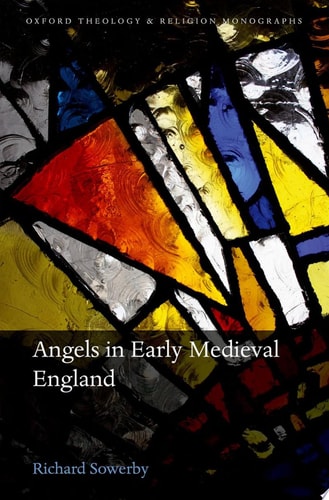
Angels in Early Medieval England
1
0
As an Amazon Associate and affiliate partner, Menrva Books earns from qualifying purchases. Learn more
Author Description
In the modern world, angels can often seem to be no more than a symbol, but in the Middle Ages men and women thought differently. Some offered prayers intended to secure the angelic assistance for the living and the dead; others erected stone monuments carved with images of winged figures; and still others made angels the subject of poetic endeavour and theological scholarship. This wealth of material has never been fully explored, and was once dismissed as the detritus of a superstitious age. Angels in Early Medieval England offers a different perspective, by using angels as a prism through which to study the changing religious culture of an unfamiliar age. Focusing on one corner of medieval Europe which produced an abundance of material relating to angels, Richard Sowerby investigates the way that ancient beliefs about angels were preserved and adapted in England during the Anglo-Saxon period. Between the sixth century and the eleventh, the convictions of Anglo-Saxon men and women about the world of the spirits underwent a gradual transformation. This book is the first to explore that transformation, and to show the ways in which the Anglo-Saxons tried to reconcile their religious inheritance with their own perspectives about the world, human nature, and God.
Menrva's Summary
THE THESIS
This book investigates how the conceptualization of angels evolved within Anglo-Saxon religious culture between the sixth and eleventh centuries. Richard Sowerby, a scholar of medieval theology, utilizes a diverse array of primary sources—including liturgical prayers, stone carvings, and poetic texts—to argue that angelic belief was a dynamic, evolving aspect of early medieval life. By examining these materials, the author demonstrates how Anglo-Saxon society reconciled inherited religious traditions with their shifting perspectives on human nature and the divine.
THE SCOPE MAP
What You Will Find
- Analysis of liturgical prayers and theological scholarship from the Anglo-Saxon period.
- Examination of physical evidence, including stone monuments and artistic representations of winged figures.
- A chronological study of religious transformation from the sixth to the eleventh century.
Scope Limits
- The study is geographically restricted to early medieval England.
- The analysis focuses primarily on the cultural and theological dimensions of angelic belief rather than a comparative study of continental European traditions.
THE AUTHORITY PERSPECTIVE
Scholars and historians recognize this work as a significant contribution to the study of Anglo-Saxon religious culture and the history of ideas. Readers frequently note the academic rigor and the depth of the primary source analysis provided by the author.
Page Count:
277
Publication Date:
2016-01-01
Publisher:
OUP Oxford
ISBN-10:
0191088129
ISBN-13:
9780191088124
Religion
History
Angels
Theology
Cultural History