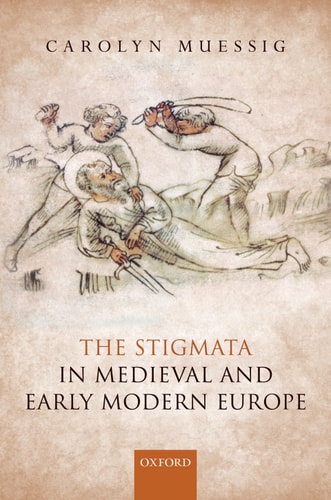
The Stigmata in Medieval and Early Modern Europe
0
0
As an Amazon Associate and affiliate partner, Menrva Books earns from qualifying purchases. Learn more
Author Description
Francis of Assisi's reported reception of the stigmata on Mount La Verna in 1224 is almost universally considered to be the first documented account of an individual miraculously and physically receiving the five wounds of Christ. The early thirteenth-century appearance of this miracle, however, is not as unexpected as it first seems. Interpretations of Galatians 6:17--I bear the marks of the Lord Jesus Christ in my body--had been circulating since the early Middle Ages in biblical commentaries. These works perceived those with the stigmata as metaphorical representations of martyrs bearing the marks of persecution in order to spread the teaching of Christ in the face of resistance. By the seventh century, the meaning of Galatians 6:17 had been appropriated by bishops and priests as a sign or mark of Christ that they received invisibly at their ordination. Priests and bishops came to be compared to soldiers of Christ, who bore the brand (stigmata) of God on their bodies, just like Roman soldiers who were branded with the name of their emperor. By the early twelfth century, crusaders were said to bear the actual marks of the passion in death and even sometimes as they entered into battle. The Stigmata in Late Medieval and Early Modern Europe traces the birth and evolution of religious stigmata and particularly of stigmatic theology, as understood through the ensemble of theological discussions and devotional practices. Carolyn Muessig assesses the role stigmatics played in medieval and early modern religious culture, and the way their contemporaries reacted to them. The period studied covers the dominant discourse of stigmatic theology: that is, from Peter Damian's eleventh-century theological writings to 1630 when the papacy officially recognised the authenticity of Catherine of Siena's stigmata.
Menrva's Summary
THE THESIS
This work investigates the historical development and theological evolution of the stigmata from the early Middle Ages through the seventeenth century. Carolyn Muessig, a scholar of medieval religious culture, examines how the interpretation of biblical texts—specifically Galatians 6:17—shifted from metaphorical representations of martyrdom to the physical manifestation of Christ's wounds. By analyzing theological treatises and devotional practices, the author constructs a framework that explains how the perception of these marks transformed within the ecclesiastical and social structures of the period.
THE SCOPE MAP
What You Will Find
- Analysis of biblical commentaries regarding Galatians 6:17 from the early Middle Ages.
- Examination of the transition from invisible, metaphorical marks in the clergy to physical stigmata in lay figures.
- Historical assessment of the role of stigmatics in medieval and early modern religious culture.
- Documentation of the papacy's evolving stance on the authenticity of stigmatic experiences.
Scope Limits
- The study is chronologically bounded between the eleventh-century writings of Peter Damian and the 1630 recognition of Catherine of Siena's stigmata.
- The text focuses primarily on European religious discourse rather than global manifestations of the phenomenon.
THE AUTHORITY PERSPECTIVE
Scholars and historians of religion frequently cite this work as a rigorous examination of the intersection between theology and physical manifestations of faith. Readers often note the academic density of the prose, which provides a comprehensive resource for those studying the history of Christian mysticism and institutional authority.
Page Count:
320
Publication Date:
2020-01-01
Publisher:
OUP Oxford
ISBN-10:
0192515144
ISBN-13:
9780192515148
Religion
History
Miracles
Theology
Christianity
Cultural History
Stigmatization
Community Tags
Similar Books