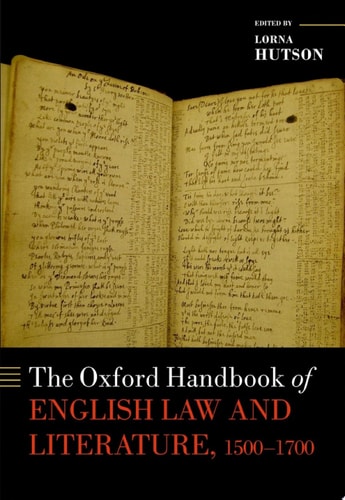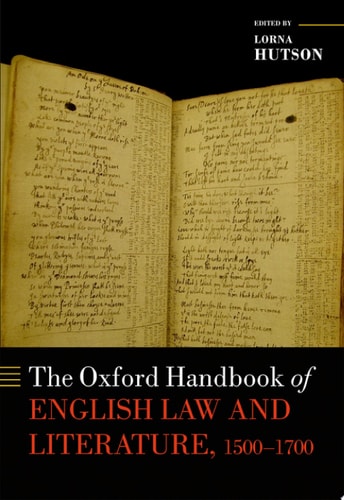
The Oxford Handbook of English Law and Literature, 1500-1700
0
0
As an Amazon Associate and affiliate partner, Menrva Books earns from qualifying purchases. Learn more
Author Description
This Handbook Triangulates The Disciplines Of History, Legal History, And Literature To Produce A New, Interdisciplinary Framework For The Study Of Early Modern England. Scholars Of Early Modern English Literature And History Have Increasingly Found That An Understanding Of How People In The Past Thought About And Used The Law Is Key To Understanding Early Modern Familial And Social Relations As Well As Important Aspects Of The Political Revolution And The Emergence Of Capitalism. Judicial Or Forensic Rhetoric Has Been Shown To Foster New Habits Of Literary Composition (poetry And Drama) And New Processes Of Fact-finding And Evidence Evaluation. In Addition, The Post-reformation Jurisdictional Dominance Of The Common Law Produced New Ways Of Drawing The Boundaries Between Private Conscience And Public Accountability. Accordingly, Historians, Critics, And Legal Historians Come Together In This Handbook To Develop Accounts Of The Past That Are Attentive To The Legally Purposeful Or Fictional Shaping Of Events In The Historical Archive. They Also Contribute To A Transformation Of Our Understanding Of The Place Of Forensic Modes Of Inquiry In The Creation Of Imaginative Fiction And Drama. Chapters In The Handbook Approach, From A Diversity Of Perspectives, Topics Including Forensic Rhetoric, Humanist And Legal Education, Inns Of Court Revels, Drama, Poetry, Emblem Books, Marriage And Divorce, Witchcraft, Contract, Property, Imagination, Oaths, Evidence, Community, Local Government, Legal Reform, Libel, Censorship, Authorship, Torture, Slavery, Liberty, Due Process, The Nation State, Colonialism, And Empire.
Menrva's Summary
THE THESIS
This handbook investigates the intersection of legal history and literary production to establish a new interdisciplinary framework for understanding early modern English culture. Editor Lorna Hutson, a distinguished scholar in the field, curates contributions from historians and literary critics to demonstrate how forensic rhetoric and common law practices shaped both social relations and imaginative writing between 1500 and 1700. The volume argues that legal modes of inquiry were foundational to the development of early modern literature, political thought, and the emergence of capitalist structures.
THE SCOPE MAP
What You Will Find
- Analysis of forensic rhetoric and its influence on poetry and drama.
- Examination of the role of Inns of Court in humanist and legal education.
- Studies on legal concepts such as property, contract, marriage, and due process.
- Investigations into the intersection of law with witchcraft, censorship, and colonialism.
Scope Limits
- The volume is strictly limited to the English context between the years 1500 and 1700.
- It does not provide a comprehensive history of English law, but rather focuses on its interaction with literary and cultural production.
THE AUTHORITY PERSPECTIVE
Scholars and academic reviewers recognize this volume as a significant contribution to the interdisciplinary study of early modern England. Readers frequently note the academic density of the prose, which serves as a rigorous resource for researchers in history, law, and literature.
Page Count:
650
Publication Date:
2017-01-01
Publisher:
Oxford University Press
ISBN-10:
0191081973
ISBN-13:
9780191081972
History
Legal History
English literature
Early Modern
Literary Criticism