Stages of Loss: The English Comedians and their Reception
0
0
As an Amazon Associate and affiliate partner, Menrva Books earns from qualifying purchases. Learn more
Author Description
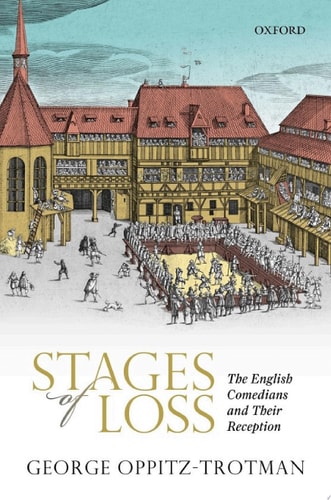
Stages of Loss supplies an original and deeply researched account of travel and festivity in early modern Europe, complicating, revising, and sometimes entirely rewriting received accounts of the emergence and development of professional theatre. It offers a history of English actors travelling and performing abroad in early modern Europe, and Germany in particular, during the sixteenth and seventeenth centuries. These players, known as English Comedians, were among the first professional actors to perform in central and northern European courts and cities. The vital contributions made by them to the development of a European theatre institution have long been neglected owing to the pre-eminence of national theatre histories and the difficulty of researching an inherently evanescent phenomenon across large distances. These contributions are here introduced in their proper contexts for the first time. Stages of Loss explores connections real and perceived between diminishments of national value and the material wealth transported by itinerant players; representations of loss, waste, and profligacy within the drama they performed; and the extent to which theatrical practice and the process of canonization have led to archival and interpretive losses in theatre history. Situating the English Comedians in a variety of economic, social, religious, and political contexts, it explores trends and continuities in the reception of their itinerant theatre, showing how their incorporation into modern theatre history has been shaped by derogatory assessments of travelling theatre and itinerant people in the seventeenth and eighteenth centuries. Stages of Loss reveals that the Western theatre institution took shape partly as a means of accommodating, controlling, evaluating, and concealing the work of migrant strangers.
Menrva's Summary
THE THESIS
This book investigates how the itinerant English Comedians of the sixteenth and seventeenth centuries shaped the development of European theatre institutions while simultaneously being marginalized by later nationalistic historiography. George Oppitz-Trotman, a scholar of early modern performance, utilizes archival records and historical reception analysis to argue that the Western theatre institution evolved as a mechanism for managing and concealing the influence of migrant performers. By examining the economic and social contexts of these actors, the author challenges traditional narratives that prioritize national theatre histories over the transnational reality of early modern performance.
THE SCOPE MAP
What You Will Find
- Historical analysis of English actors performing in Germany and across northern Europe during the 16th and 17th centuries.
- Examination of the intersection between itinerant performance, economic migration, and the concept of national value.
- Investigation into how 17th and 18th-century biases against travelling performers influenced modern theatrical canonization.
Scope Limits
- The study does not provide a comprehensive biography of every individual actor, focusing instead on the institutional and reception-based history of the groups.
- It does not attempt to reconstruct the full performance texts of lost plays, but rather analyzes the cultural impact of the performances themselves.
THE AUTHORITY PERSPECTIVE
Scholars in the field of early modern theatre history recognize this work as a significant intervention that corrects long-standing neglect of transnational performance practices. Readers frequently note the academic density of the prose and the rigorous archival methodology employed to re-evaluate the role of migrant actors in European cultural history.
Page Count:
336
Publication Date:
2020-01-01
Publisher:
OUP Oxford
ISBN-10:
0192602454
ISBN-13:
9780192602459
History
English
European History
Performance Studies
English literature
Early Modern
English & College Success
Theatre History
Community Tags
Similar Books