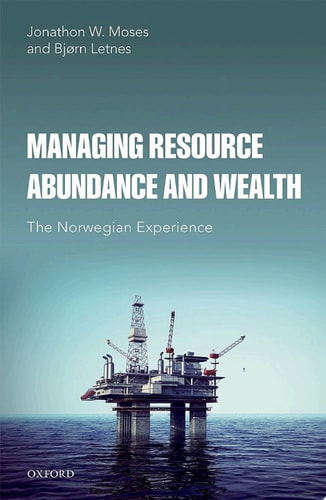
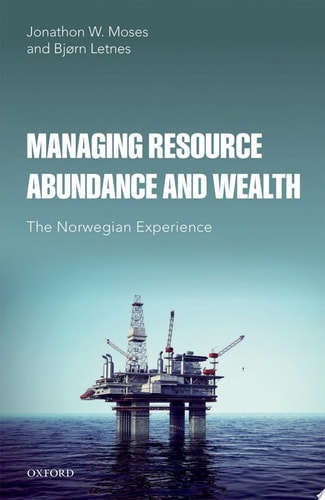
Managing Resource Abundance and Wealth: The Norwegian Experience
0
0
As an Amazon Associate and affiliate partner, Menrva Books earns from qualifying purchases. Learn more
Author Description
Managing Resource Abundance and Wealth: The Norwegian Experience describes the sundry and significant challenges, both economic and political, facing petroleum-producing countries. The volume outlines the pitfalls that policymakers encounter in the aftermath of a major resource discovery, and what they can do to protect their countries from the most adverse consequences. These lessons are derived from two very different sources: The broader-if still underdeveloped-social science literature that examines the 'Paradox of Plenty' in its disparate forms; and the experience of a country that has successfully managed its natural resources over several decades. As a small country on the margins of Europe, Norway has stood up to powerful international interests in one of the world's most powerful industries. Norway has exerted sovereign control over its natural environment, and exploited its resources in a way that has delivered significant wealth to its citizens. This volume explains how Norway has largely avoided the 'Paradox of Plenty'. It aims to demonstrate the variety of policy tools that are available to states rich in natural resources, and how these tools can be adjusted to changing (domestic and international) contexts. It considers a number of questions, such as how countries need to administer and regulate the industry to consider the costs and benefits associated with various contract and licensing regimes, and fiscal arrangements; to maintain competitiveness and avoid becoming too dependent upon the sector; to maximize local content; and to protect the broader economy from the volatility of petroleum prices. The volume shows how the industry can be managed in a democratic, just, and ethical manner, and for the benefit of the general population.
Menrva's Summary
THE THESIS
How can resource-rich nations effectively manage natural wealth to avoid the economic and political pitfalls known as the 'Paradox of Plenty'? Bjørn Letnes and Jonathon W. Moses analyze the Norwegian model of petroleum management to provide a framework for sovereign resource control. By synthesizing social science literature with historical case study data, the authors examine the regulatory, fiscal, and democratic mechanisms required to insulate a national economy from commodity price volatility and industrial over-dependence.
THE SCOPE MAP
What You Will Find
- Analysis of the 'Paradox of Plenty' and its impact on resource-producing states.
- Evaluation of contract, licensing, and fiscal regimes in the petroleum sector.
- Strategies for maintaining economic competitiveness and maximizing local content.
- Examination of democratic and ethical governance in resource management.
Scope Limits
- The text focuses primarily on the Norwegian experience and may not account for the unique geopolitical constraints of non-democratic or developing nations.
- It does not provide a comprehensive technical manual for petroleum engineering or geological exploration.
THE AUTHORITY PERSPECTIVE
Experts identify this volume as a significant contribution to the study of political economy and resource management. Readers frequently note the academic rigor of the prose, which serves as a foundational text for policymakers and students interested in the intersection of state sovereignty and global energy markets.
Page Count:
342
Publication Date:
2017-01-01
Publisher:
OUP Oxford
ISBN-10:
0191090948
ISBN-13:
9780191090943
Economics
Norway
Public Policy
Natural Resources
Community Tags
Other Editions(2)
Similar Books

Reader Comments
Share Your Thoughts
No comments yet. Be the first to share your thoughts!