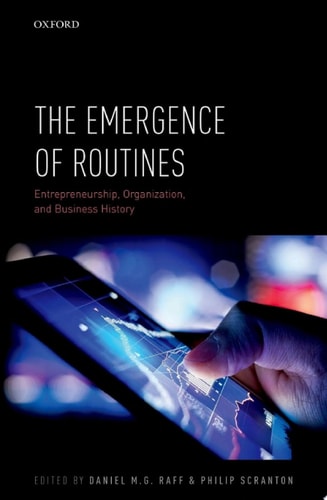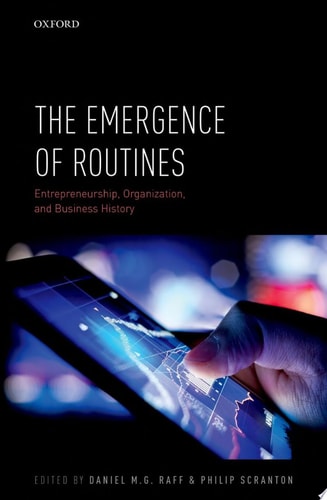
The Emergence of Routines
0
0
As an Amazon Associate and affiliate partner, Menrva Books earns from qualifying purchases. Learn more
Author Description
This Book Is A Collection Of Essays About The Emergence Of Routines And, More Generally, About Getting Things Organized In Firms And In Industries In Early Stages And In Transition. These Are Subjects Of The Greatest Interest To Students Of Entrepreneurship And Organizations, As Well As To Business Historians, But The Academic Literature Is Thin. The Chronological Settings Of The Book's Eleven Substantive Chapters Are Historical, Reaching As Far Back As The Late 1800s Right Up To The 1990s, But The Issues They Raise Are Evergreen And The Historical Perspective Is Exploited To Advantage. The Chapters Are Organized In Three Broad Groups: Examining The Emergence Of Order And Routines In Initiatives, Studying The Same Subject In Ongoing Operations, And A Third Focusing Specifically On The Phenomena Of Transition. The Topics Range From The Book-of-the-month Club To Industrial Research At Alcoa, From The Evolution Of Procurement And Coordination To Project-based Industries Such As Bridge- And Dam-building And The Governance Of Defence Contracting, And From The Development Of Project Performance Appraisal At The World Bank To The Way The Global Automobile Industry Collectively Redesigned The Internal Combustion Engine To Deal With After The Advent Of Environmental Regulation. The Chapters Are Vivid And Thought-provoking In Themselves And, For Pedagogical Purposes, Offer Excellent Jumping-off Points For Discussion Of Relevant Experiences And Cognate Academic Literature.
Menrva's Summary
THE THESIS
This collection of essays investigates the mechanisms through which organizational routines and operational order emerge within firms and industries during their formative stages or periods of significant transition. Editors Daniel M. G. Raff and Philip Scranton compile eleven substantive chapters that utilize historical case studies to address the scarcity of academic literature regarding how businesses establish structure. By analyzing developments from the late 19th century through the 1990s, the authors argue that historical perspective provides a necessary framework for understanding contemporary organizational challenges.
THE SCOPE MAP
What You Will Find
- Historical analysis of organizational evolution from the 1880s to the 1990s.
- Case studies covering diverse sectors including the Book-of-the-Month Club, Alcoa, and the World Bank.
- Examination of project-based industries such as dam-building and defense contracting.
- Frameworks for understanding procurement, coordination, and performance appraisal.
Scope Limits
- The text does not provide a singular, unified theory of management but rather a collection of distinct historical observations.
- It does not offer prescriptive advice for modern startups, focusing instead on historical analysis and pedagogical discussion.
THE AUTHORITY PERSPECTIVE
Experts identify this volume as a valuable resource for business historians and students of organizational behavior due to its focus on under-researched historical transitions. Readers frequently note that the chapters serve as effective prompts for academic discussion regarding the evolution of industrial governance.
Page Count:
400
Publication Date:
2016-01-01
Publisher:
Oxford University Press
ISBN-10:
0191091715
ISBN-13:
9780191091711
Organizational Theory
Economic History
Business History
Community Tags
Similar Books