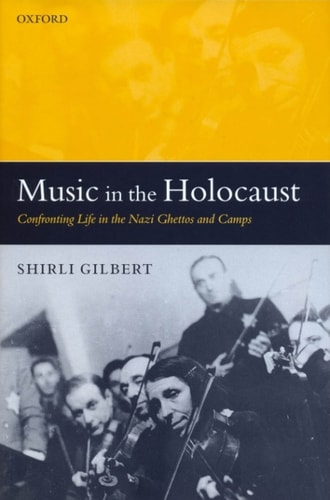
Music in the Holocaust: Confronting Life in the Nazi Ghettos and Camps
0
0
As an Amazon Associate and affiliate partner, Menrva Books earns from qualifying purchases. Learn more
Author Description
In Music in the Holocaust Shirli Gilbert provides the first large-scale, critical account of the role of music amongst communities imprisoned under Nazism. She documents a wide scope of musical activities, ranging from orchestras and chamber groups to choirs, theatres, communal sing-songs, and cabarets, in some of the most important internment centres in Nazi-occupied Europe, including Auschwitz and the Warsaw and Vilna ghettos. Gilbert is also concerned with exploring the ways in which music - particularly the many songs that were preserved - contribute to our broader understanding of the Holocaust and the experiences of its victims. Music in the Holocaust is, at its core, a social history, taking as its focus the lives of individuals and communities imprisoned under Nazism. Music opens a unique window on to the internal world of those communities, offering insight into how they understood, interpreted, and responded to their experiences at the time.
Menrva's Summary
THE THESIS
How did music function as a mechanism for survival, cultural expression, and social interpretation within the communities imprisoned under the Nazi regime? Shirli Gilbert, a historian specializing in the cultural history of the Holocaust, utilizes a vast array of primary sources, including preserved songs, diaries, and survivor testimonies, to construct this social history. She argues that musical activity was not merely a distraction but a vital tool for victims to process their environment and maintain a sense of communal identity amidst extreme dehumanization.
THE SCOPE MAP
What You Will Find
- Analysis of musical activities in major internment centers including Auschwitz, Warsaw, and Vilna.
- Examination of diverse performance formats such as orchestras, cabarets, choirs, and communal sing-songs.
- A framework for interpreting music as a primary source for understanding the internal psychological and social lives of prisoners.
Scope Limits
- The text does not provide a comprehensive catalog of every musical performance that occurred during the Holocaust.
- It does not focus on the technical musicological analysis of compositions, but rather on their social and historical context.
THE AUTHORITY PERSPECTIVE
Scholars and historians recognize this work as a foundational text for understanding the cultural dimensions of life in Nazi ghettos and camps. Readers frequently note the academic rigor and the sensitive, nuanced approach the author takes when analyzing the intersection of trauma and creative expression.
Page Count:
256
Publication Date:
2005-01-01
Publisher:
Clarendon Press
ISBN-10:
0191515477
ISBN-13:
9780191515477
History
Jews music
World War
Musicology
Jewish History
Social History
Community Tags
Similar Books