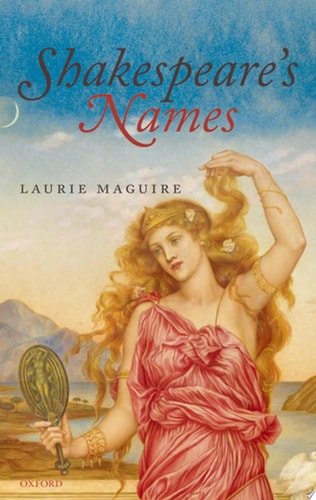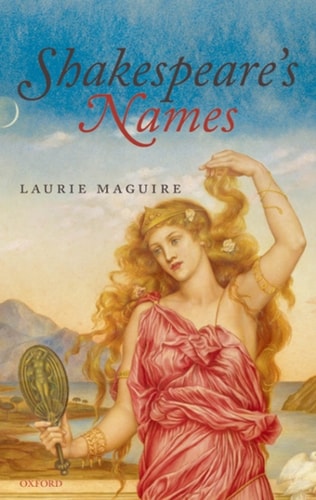
Shakespeare's Names
0
0
As an Amazon Associate and affiliate partner, Menrva Books earns from qualifying purchases. Learn more
Author Description
How do names attach themselves to particular objects and people and does this connection mean anything? This is a question which goes as far back as Plato and can still be seen in contemporary society with books of Names to Give Your Baby or Reader's Digest columns of apt names and professions. For the Renaissance the vexed question of naming was a subset of the larger but equally vexed subject of language: is language arbitrary and conventional (it is simply an agreed label for a pre-existing entity) or is it motivated (it creates the entity which it names)? Shakespeare's Names is a book for language-lovers. Laurie Maguire's witty and learned study examines names, their origins, cultural attitudes to them, and naming practices across centuries and continents, exploring what it means for Shakespeare's characters to bear the names they do. She approaches her subject through close analysis of the associations and use of names in a range of Shakespeare plays, and in a range of performances. The focus is Shakespeare, and in particular six key plays: Romeo and Juliet, Comedy of Errors, The Taming of the Shrew, A Midsummer Night's Dream, All's Well that Ends Well, and Troilus and Cressida. But the book also shows what Shakespeare inherited and where the topic developed after him. Thus the discussion includes myth, the Bible, Greek literature, psychological analysis, literary theory, social anthropology, etymology, baptismal trends, puns, different cultures' and periods' social practice as regards the bestowing and interpreting of names, and English literature in the sixteenth, seventeenth, eighteenth, nineteenth, and twentieth centuries; the reader will also find material from contemporary journalism, film, and cartoons.
Menrva's Summary
THE THESIS
How do names attach themselves to particular objects and people, and does this connection carry inherent meaning? Laurie Maguire, a scholar of Renaissance literature, investigates the philosophical and linguistic tension between naming as an arbitrary convention and naming as a creative, motivated act. By analyzing Shakespearean nomenclature, she explores how names function as cultural markers and psychological identifiers within the context of early modern drama and beyond.
THE SCOPE MAP
What You Will Find
- Linguistic analysis of naming conventions in six primary Shakespearean plays including Romeo and Juliet and The Comedy of Errors.
- Interdisciplinary research incorporating myth, the Bible, social anthropology, and etymology.
- Comparative studies spanning from Greek literature to contemporary journalism and film.
Scope Limits
- The study is not an exhaustive encyclopedia of every name in the Shakespearean canon.
- It does not provide a definitive historical record of baptismal trends outside of their relevance to literary interpretation.
THE AUTHORITY PERSPECTIVE
Scholars and students of Shakespeare frequently cite this text for its ability to bridge the gap between rigorous linguistic theory and accessible literary analysis. Experts highlight the work as a valuable resource for understanding the cultural weight of language in the Renaissance period.
Page Count:
256
Publication Date:
2007-01-01
Publisher:
Oxford University Press
ISBN-10:
0191527521
ISBN-13:
9780191527524
Onomastics
English
Literary Criticism
Renaissance
Linguistics
English & College Success