The Multiculturalism of Fear
0
0
As an Amazon Associate and affiliate partner, Menrva Books earns from qualifying purchases. Learn more
Author Description
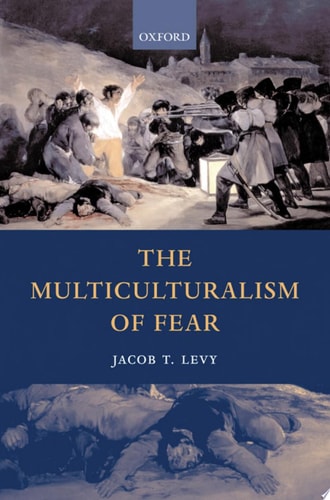
The Multiculturalism of Fear argues for a liberal account of multiculturalism which draws on a liberalism of fear like that articulated by Judith Shklar and inspired by Montesquieu. Liberalism should not be centrally concerned either with preserving or with transcending cultural communities, practices, and identities. Rather, it should focus on mitigating evils such as inter-ethnic civil wars, cruel practices internal to cultural communities, and state violence against ethnic minorities. This 'multiculturalism of fear' must be grounded in the realities of ethnic politics and ethnic conflict. It must therefore take seriously the importance which persons feel their ethnic identities and cultural practices to have, without falling into a celebration of cultural belonging. Levy argues against nationalist and multicultural theories that accord significant moral weight to cultural communities as such. Yet he also insists that the challenges of life in a multicultural world cannot be met without a recognition of the importance that particularist identities and practices have to individual persons and to social life. The book applies the multiculturalism of fear to a variety of policy problems confronting multiethnic states. These include the regulation of sexist practices internal to cultural communities; secession and national self-determination; land rights; customary law; and the symbols and words used by the state, including official apologies. It draws on cases from such diverse states as Australia, Canada, Israel, India, South Africa, and the United States.
Menrva's Summary
THE THESIS
This book investigates how a liberal political framework can address the challenges of multiethnic societies by prioritizing the mitigation of state violence and inter-ethnic conflict over the preservation of cultural identities. Jacob T. Levy, a political theorist, synthesizes the 'liberalism of fear' tradition—notably the work of Judith Shklar and Montesquieu—to propose a pragmatic approach to multiculturalism. He argues that the state's primary moral obligation is to prevent cruelty and civil strife rather than to promote or dismantle specific cultural practices. The framework centers on the lived reality of ethnic identity as a significant social force that requires careful, non-idealized management by the state.
THE SCOPE MAP
What You Will Find
- A theoretical framework for 'multiculturalism of fear' applied to modern state policy.
- Analysis of specific policy challenges including customary law, land rights, and state symbols.
- Comparative case studies from Australia, Canada, India, Israel, South Africa, and the United States.
Scope Limits
- The text does not provide a comprehensive defense of cultural nationalism or identity-based state promotion.
- It does not offer a universal solution for all internal cultural disputes, focusing instead on state-level mitigation of harm.
THE AUTHORITY PERSPECTIVE
Scholars and political theorists frequently cite this work as a significant contribution to the debate on liberal responses to identity politics. Readers often note the academic density of the prose, which requires familiarity with contemporary political philosophy to fully synthesize the author's arguments.
Page Count:
280
Publication Date:
2000-01-01
Publisher:
OUP Oxford
ISBN-10:
0191522821
ISBN-13:
9780191522826
Sociology
Nationalism
Liberalism
Ethnic relations
Ethnic Conflict
Fear
Political Philosophy