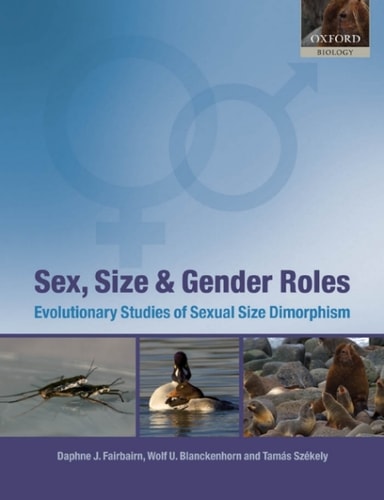
Sex, Size and Gender Roles: Evolutionary Studies of Sexual Size Dimorphism
0
0
As an Amazon Associate and affiliate partner, Menrva Books earns from qualifying purchases. Learn more
Author Description
Why do males and females frequently differ so markedly in body size and morphology?lSex, Size, and Gender Roles is the first book to investigate the genetic, developmental, and physiological basis of sexual size dimorphism found within and among the major taxonomic groups of animals. Carefully edited by a team of world-renowned specialists in the field to ensure a coherence of style and approach between chapters, it presents a compendium of studies into the evolution, adaptive significance, and developmental basis of gender differences in body size and morphology. Adaptive hypotheses allude to gender-specific reproductive roles and associated differences in trophic ecologies, life history strategies, and sexual selection. This "adaptationist" approach is balanced by more mechanistic studies of the genetic, developmental and physiological basis of sexual size dimorphism to provide a comprehensive and authoritative overview of the subject. Throughout the volume the emphasis is on sexual dimorphism in overall size; however, the scope of enquiry encompasses gender differences in body shape, the size and structure of secondary sexual characteristics, patterns of growth (ontogeny), and patterns of gene regulation. This advanced, research level text is suitable for graduate level students and researchers in the fields of evolutionary biology, behavioural ecology, physiology, developmental biology, and genetics. It will also be of relevance and use to non-biologists from fields such as anthropology and gender studies.
Menrva's Summary
THE THESIS
This volume investigates the genetic, developmental, and physiological mechanisms that drive sexual size dimorphism across diverse animal taxa. The editors, Daphne J. Fairbairn, Tamás Székely, and Wolf U. Blanckenhorn, synthesize research from leading specialists to examine why males and females exhibit distinct morphological differences. The text balances adaptive hypotheses regarding reproductive roles and life history strategies with mechanistic inquiries into gene regulation and ontogeny.
THE SCOPE MAP
What You Will Find
- Comparative analyses of sexual size dimorphism across major animal groups
- Examination of trophic ecologies and sexual selection pressures
- Research on growth patterns and secondary sexual characteristics
- Integration of genetic and physiological data
Scope Limits
- Focus is primarily on biological and evolutionary mechanisms rather than sociological gender theory
- Excludes non-animal taxonomic groups
THE AUTHORITY PERSPECTIVE
Experts recognize this work as a foundational, research-level text for graduate students and professionals in evolutionary biology and behavioral ecology. Readers frequently note the academic density of the prose and the rigorous, multi-disciplinary approach to complex biological phenomena.
Page Count:
266
Publication Date:
2007-01-01
Publisher:
Oxford University Press
ISBN-10:
0191526088
ISBN-13:
9780191526084
Behavioral Ecology
Gender Studies
Anthropology
Zoology
Genetics
Physical Anthropology
Developmental Biology
Physiology
Evolutionary Biology
Community Tags
Similar Books