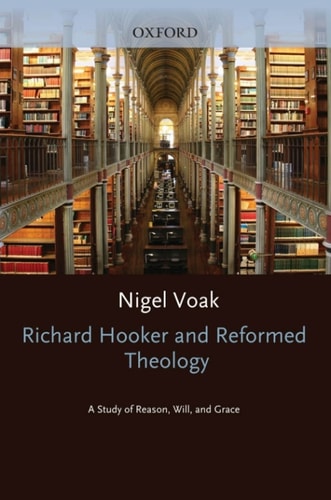
Richard Hooker and Reformed Theology: A Study of Reason, Will, and Grace
0
0
As an Amazon Associate and affiliate partner, Menrva Books earns from qualifying purchases. Learn more
Author Description
Richard Hooker (1554-1600) has traditionally been seen as the first systematic defender of an Anglican via media between Rome and Geneva. Revisionists have argued recently, however, that Hooker was in fact a thoroughly Reformed theologian. Dr Voak takes issue with this interpretation, arguing that Hooker over time became highly critical of numerous Reformed positions. Beginning with philosophical principles underlying Hooker's theology (e.g. free will, resistibility of grace), the book then considers issues such as original sin, justification and sanctification, merit and the religious authority of scripture, reason, and tradition. Finally, Hooker's late manuscripts are examined, in which he defends himself from the charge of heresy.
Menrva's Summary
THE THESIS
This study investigates whether Richard Hooker should be classified as a traditional defender of the Anglican via media or as a thoroughly Reformed theologian. Dr. Nigel Voak, a scholar of historical theology, challenges recent revisionist interpretations that align Hooker closely with Reformed orthodoxy. By analyzing Hooker's philosophical foundations and his evolving stance on key doctrines, Voak argues that Hooker increasingly distanced himself from Reformed positions throughout his career.
THE SCOPE MAP
What You Will Find
- Analysis of philosophical principles including free will and the resistibility of grace.
- Examination of core theological doctrines such as original sin, justification, and sanctification.
- Investigation of Hooker's late manuscripts regarding charges of heresy.
- Evaluation of the interplay between scripture, reason, and tradition in Hooker's work.
Scope Limits
- The study focuses primarily on Hooker's theological development rather than his political influence.
- It does not provide a general biography of Hooker's life outside of his intellectual output.
THE AUTHORITY PERSPECTIVE
Scholars recognize this work as a significant contribution to the ongoing debate regarding Hooker's place within the Reformed tradition. Readers frequently note the academic density of the prose and the rigorous engagement with primary source material.
Page Count:
368
Publication Date:
2003-01-01
Publisher:
OUP Oxford
ISBN-10:
0191532010
ISBN-13:
9780191532016
Religion
Philosophy history
Reformed Theology
Christian History
Theology
Anglicanism