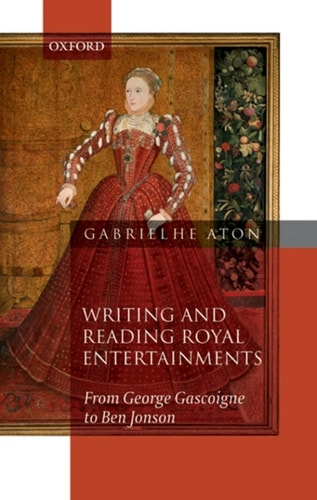
Writing and Reading Royal Entertainments: From George Gascoigne to Ben Jonson
0
0
As an Amazon Associate and affiliate partner, Menrva Books earns from qualifying purchases. Learn more
Author Description
This major new study of Elizabethan and Jacobean royal entertainments, including country house entertainments, tiltyard speeches, and court masques, is the first to look in detail at the evidence provided by the surviving material texts. Drafts, royal presentation manuscripts, widely-circulating scribal copies, and printed pamphlets are all carefully placed in their cultural context, and the medium of manuscript is shown to have been at least as important as print for these texts' circulation. From the close collaboration between commissioning host and hired writer, to the varied interpretations imposed by copyists and publishers, entertainments were written and read within a complex social nexus: far from being royal propaganda, they reflected the distinct and sometimes competing agendas of monarchs, commissioning hosts, authors, publishers, scribal intermediaries, and readers. Writing and Reading Royal Entertainments explores this interpretative community through a range of texts. The first part of the book looks at Elizabethan entertainments: the Woodstock entertainment of 1575 (Chapter I); tiltyard speeches (Chapter II); and the distinctive features of printed pamphlets and scribal copies, notably of the 1602 Harefield entertainment (Chapter III). The second part of the book is mostly concerned with Ben Jonson's work for the Jacobean court, with chapters on the Merchant Taylors' entertainment (Chapter IV) and the Theobalds' entertainment (Chapter V). The final chapter looks at the texts of court masques, especially in the light of Jonson's understanding of the poet's elevated role. The book's conclusion takes the story of these material texts beyond the early modern period and looks at how they have been collected, bought, and sold over the centuries.
Menrva's Summary
THE THESIS
This study investigates how the material transmission of Elizabethan and Jacobean royal entertainments—through manuscripts, pamphlets, and printed texts—shaped their meaning and reception within early modern society. Gabriel Heaton, a scholar of early modern literature, utilizes a bibliographical and historical framework to challenge the notion that these works functioned merely as royal propaganda. By examining the physical evidence of drafts and presentation copies, he argues that these texts were products of a complex social nexus involving hosts, authors, and intermediaries with competing agendas.
THE SCOPE MAP
What You Will Find
- Analysis of Elizabethan entertainments including the 1575 Woodstock and 1602 Harefield events.
- Examination of Jacobean court masques and specific works by Ben Jonson.
- Investigation into the role of scribal culture versus print culture in text circulation.
- Historical overview of how these material texts have been collected and traded over subsequent centuries.
Scope Limits
- The study focuses primarily on the material text and its circulation rather than a performance-based analysis of the events.
- The scope is limited to the specific period from George Gascoigne to Ben Jonson.
THE AUTHORITY PERSPECTIVE
Scholars recognize this work as a significant contribution to the study of early modern book history and the material culture of the court. Readers frequently note the academic density of the prose and the precision with which Heaton connects bibliographical evidence to broader social and political contexts.
Page Count:
272
Publication Date:
2010-01-01
Publisher:
Oxford University Press
ISBN-10:
0191549940
ISBN-13:
9780191549946
History - Modern
Book History
Literary Criticism
English literature
Masques
English & College Success
English
Cultural History
Community Tags
Similar Books