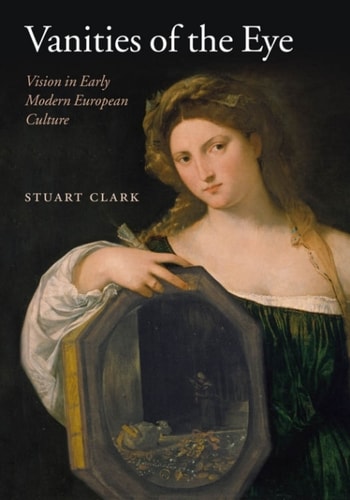
Vanities of the Eye: Vision in Early Modern European Culture
0
0
As an Amazon Associate and affiliate partner, Menrva Books earns from qualifying purchases. Learn more
Author Description
Vanities of the Eye investigates the cultural history of the senses in early modern Europe, a time in which the nature and reliability of human vision was the focus of much debate. In medicine, art theory, science, religion, and philosophy, sight came to be characterised as uncertain or paradoxical - mental images no longer resembled the external world. Was seeing really believing? Stuart Clark explores the controversial debates of the time - from the fantasies and hallucinations of melancholia, to the illusions of magic, art, demonic deceptions, and witchcraft. The truth and function of religious images and the authenticity of miracles and visions were also questioned with new vigour, affecting such contemporary works as Macbeth - a play deeply concerned with the dangers of visual illusion. Clark also contends that there was a close connection between these debates and the ways in which philosophers such as Descartes and Hobbes developed new theories on the relationship between the real and virtual. Original, highly accessible, and a major contribution to our understanding of European culture, Vanities of the Eye will be of great interest to a wide range of historians and anyone interested in the true nature of seeing.
Menrva's Summary
THE THESIS
This book investigates the cultural history of vision in early modern Europe, specifically addressing the period's pervasive skepticism regarding the reliability of human sight. Stuart Clark, a historian specializing in early modern intellectual culture, synthesizes evidence from medicine, art theory, science, religion, and philosophy to argue that sight was increasingly viewed as paradoxical. He posits that this crisis of perception fundamentally shaped the development of modern philosophical theories concerning the relationship between reality and virtuality.
THE SCOPE MAP
What You Will Find
- Analysis of visual phenomena including hallucinations, melancholia, and demonic deceptions.
- Examination of the role of visual illusion in religious iconography and the authentication of miracles.
- Discussion of the intersection between early modern visual debates and the philosophies of Descartes and Hobbes.
- Literary analysis of visual illusion in contemporary works such as Macbeth.
Scope Limits
- The text does not provide a comprehensive history of optical technology or the physical mechanics of the eye.
- It focuses primarily on European intellectual history rather than global perspectives on vision.
THE AUTHORITY PERSPECTIVE
Historians and scholars of early modern culture frequently cite this work as a significant contribution to the study of sensory history. Readers often note the academic density of the prose, which provides a rigorous examination of how visual uncertainty influenced the intellectual foundations of the modern era.
Page Count:
420
Publication Date:
2007-01-01
Publisher:
Oxford University Press
ISBN-10:
0191562092
ISBN-13:
9780191562099
Philosophy
History
Science History
Vision
Art History
Early Modern
Philosophy Modern
Ancient History
Cultural History
Community Tags
Similar Books