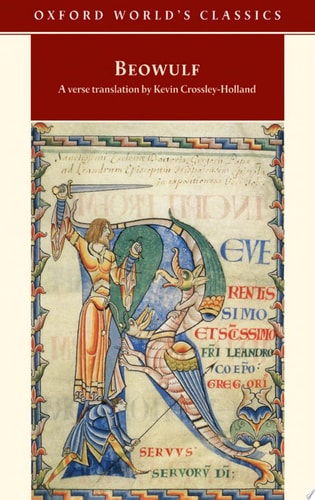
Beowulf: The Fight at Finnsburh
0
0
As an Amazon Associate and affiliate partner, Menrva Books earns from qualifying purchases. Learn more
Author Description
Beowulf is the longest and finest literary work to have come down to us from Anglo-Saxon times, and one of the world's greatest epic poems. Set in the half-legendary, half historical Scandinavian past, it tells the story of the hero Beowulf, who comes to the aid of the Danish king Hrothgar by killing first the terrifying, demonic monster Grendel, and then Grendel's infuriated and vengeful mother. A lifetime later, Beowulf's own kingdom, Geatland, is threatened by a fiery dragon; Beowulf heroically takes on this challenge, but himself dies killing the dragon. The poem celebrates the virtues of the heroic life, but Hrothgar and Beowulf are beacons of wisdom and courage in a dark world of feuds, violence and uncertainty, and Beowulf's selfless heroism is set against a background of ruthless power struggles, fratricide and tyranny. This acclaimed translation is complemented by a critical introduction and substantial editorial apparatus. `The poem has at last found its translator...supremely well done' Charles Causley ABOUT THE SERIES: For over 100 years Oxford World's Classics has made available the widest range of literature from around the globe. Each affordable volume reflects Oxford's commitment to scholarship, providing the most accurate text plus a wealth of other valuable features, including expert introductions by leading authorities, helpful notes to clarify the text, up-to-date bibliographies for further study, and much more.
Menrva's Summary
THE PULSE
The poem chronicles the life and death of the Geatish hero Beowulf as he confronts three distinct supernatural threats to ensure the survival of his people. Beowulf travels to Denmark to assist King Hrothgar, whose hall is plagued by the monster Grendel and later by Grendel's mother. The narrative follows the hero through his youth as a warrior and his eventual reign as king, where he must face a final, fatal encounter with a dragon. The poem utilizes an alliterative verse structure characteristic of Old English literature, emphasizing the tension between individual heroism and the inevitability of fate. The narrative framework shifts between historical accounts of Scandinavian tribal conflicts and the central mythic encounters of the protagonist.
INSIDE THE PAGES
- Use of traditional Old English alliterative verse
- Inclusion of the fragmentary Fight at Finnsburh poem
- Detailed critical introduction by Heather O'Donoghue
- Extensive explanatory notes on historical and cultural context
- Exploration of the Germanic heroic code
- Examination of the tension between pagan tradition and Christian influence
- Analysis of the poem's structure and oral composition
- Inclusion of a map and genealogical tables for reader reference
THE COLLECTIVE ECHO
Readers and scholars frequently highlight this edition for its balance between accessible translation and rigorous academic support. Discussion often centers on the effectiveness of the translation in capturing the rhythmic intensity of the original Old English text. Critics appreciate the inclusion of the Fight at Finnsburh, which provides necessary context for the broader heroic tradition depicted in the main poem. The editorial apparatus is consistently praised for clarifying the complex web of tribal alliances and historical references that define the setting. Many readers find the introduction particularly useful for understanding the cultural values of the Anglo-Saxon period.
Page Count:
176
Publication Date:
2008-01-01
Publisher:
OUP Oxford
ISBN-10:
0191574082
ISBN-13:
9780191574085
Medieval
Anglo-Saxon
Mythology
Epic Poetry
Heroic Poetry
English
English & College Success
Classic Literature