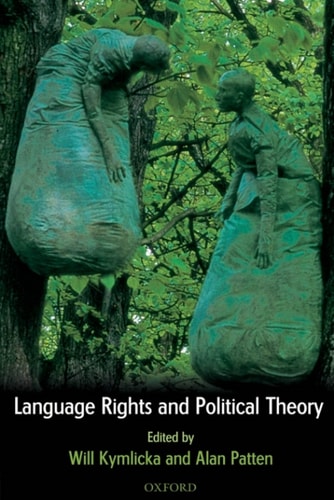
Language Rights and Political Theory
0
0
As an Amazon Associate and affiliate partner, Menrva Books earns from qualifying purchases. Learn more
Author Description
Disputes over language policy are a persistent feature of the political life of many states around the world. Multilingual countries in the West such as Belgium, Spain, Switzerland and Canada have long histories of conflict over language rights. In many countries in Eastern Europe and the Third World, efforts to construct common institutions and a shared identity have been severely complicated by linguistic diversity. Indigenous languages around the world are in danger of disappearing. Even in the United States, where English is widely accepted as the language of public life, the linguistic rights of Spanish-speakers are hotly-contested. Not surprisingly, therefore, political theorists have started to examine questions of language policy, and how they relate to broader issues of democracy, justice and rights. This volume provides the reader with an up-to-date overview of the emerging debates over the role of language rights and linguistic diversity within political theory. It brings together many of the leading political theorists who work in the field, together with some of the most important social scientists, with the aim of exploring how political theorists can conceptualize issues of language rights and contribute to public debates on language policy. Questions of language policy are not only of enormous political importance in many countries, but also help to illuminate some of the most important debates in contemporary political theory, including questions of citizenship, deliberative democracy, nationalism, multiculturalism, identity politics, group rights, the liberal-communitarian debate, and so on. The thirteen essays in this volume highlight both the empirical constraints and normative complexities of language policy, and identify the important challenges and opportunities that linguistic diversity raises for contemporary political theory.
Menrva's Summary
THE THESIS
This volume investigates how political theory can effectively conceptualize language rights and address the normative complexities inherent in linguistic diversity. Editors Alan Patten and Will Kymlicka, both prominent scholars in political philosophy, curate a collection of essays that bridge the gap between empirical social science and normative political theory. The text argues that language policy is not merely a technical administrative concern but a fundamental issue of justice, citizenship, and democratic legitimacy.
THE SCOPE MAP
What You Will Find
- Analysis of language rights within the context of democracy, nationalism, and identity politics.
- Theoretical frameworks for addressing linguistic diversity in both Western and non-Western states.
- Examination of the liberal-communitarian debate regarding group rights and individual autonomy.
Scope Limits
- The text does not provide a comprehensive legal manual for specific national language policies.
- It does not offer a singular, unified solution to the global decline of indigenous languages.
THE AUTHORITY PERSPECTIVE
Scholars and students of political theory regard this volume as a foundational collection for understanding the intersection of linguistic policy and democratic justice. Readers frequently note the academic density of the prose, which is tailored for advanced students and researchers in the field of political science.
Page Count:
368
Publication Date:
2003-01-01
Publisher:
Oxford University Press
ISBN-10:
0191586110
ISBN-13:
9780191586118
English & College Success
Political Theory
Human rights
Linguistics
English
Public Policy
Community Tags
Other Editions(2)

Similar Books


Reader Comments
Share Your Thoughts
No comments yet. Be the first to share your thoughts!