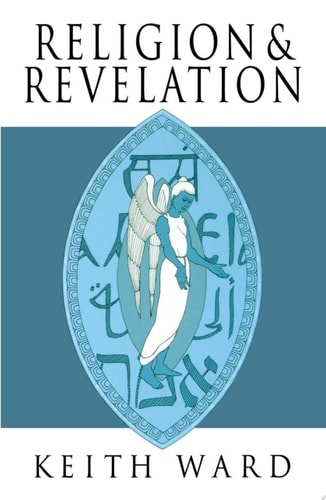
Religion and Revelation: A Theology of Revelation in the World's Religions
0
0
As an Amazon Associate and affiliate partner, Menrva Books earns from qualifying purchases. Learn more
Author Description
Since first Thomas Aquinas defined theology as revelation, or the rational elucidation of revealed truth, the idea of revelation has played a fundamental role in the history of western theology. This book provides a new and detailed investigation of the concept, examining its nature, sources, and limitations in all five of the major scriptural religions of the world: Christianity, Judaism, Islam, Hinduism, and Buddhism. The first part of the book discusses the nature of theology, and expounds the comparative method as the most useful and appropriate for the modern age. Part Two focuses on the nature of religion and its early historical manifestations, whilst the third part of the book goes on to consider the idea of revelation as found in the great canonical traditions of the religions of the world. Part Four develops the distinctively Christian idea of revelation as divine self-expression in history. The final part of the book discusses how far the idea of revelation must be revised or adapted in the light of modern historical and scientific thought, and proposes a new and positive theology of revelation for the future. The book includes discussions of the work of most major theologians and scholars in the study of religion - Aquinas, Tillich, Barth, Temple, Frazer, and Evans Pritchard - and should be of interest to many scholars and students of comparative religion and theology, and anthropologists.
Menrva's Summary
THE THESIS
This book investigates the concept of revelation across the world's major scriptural traditions to propose a revised theology suitable for the modern era. Keith Ward, a prominent scholar of religion and philosophy, utilizes a comparative methodology to analyze how revelation functions within Christianity, Judaism, Islam, Hinduism, and Buddhism. By synthesizing historical, scientific, and theological perspectives, the author argues for a re-evaluation of divine self-expression in a contemporary context.
THE SCOPE MAP
What You Will Find
- Comparative analysis of revelation in five major world religions
- A framework for modern theological inquiry using the comparative method
- Critical engagement with the works of Aquinas, Tillich, Barth, and other major theologians
- Historical and scientific critiques of traditional revelation concepts
Scope Limits
- The text focuses primarily on scriptural traditions and may not address non-canonical or indigenous spiritual practices in equal depth.
THE AUTHORITY PERSPECTIVE
Scholars and students of comparative religion frequently cite this work as a significant contribution to the dialogue between traditional theology and modern historical criticism. The text is noted for its academic rigor and its systematic approach to complex theological questions.
Page Count:
360
Publication Date:
1994-01-01
Publisher:
Oxford University Press
ISBN-10:
019158844X
ISBN-13:
9780191588440
Religion
Philosophy
Theology
Revelation
History of religion
Philosophy of
Community Tags
Other Editions(2)

Similar Books