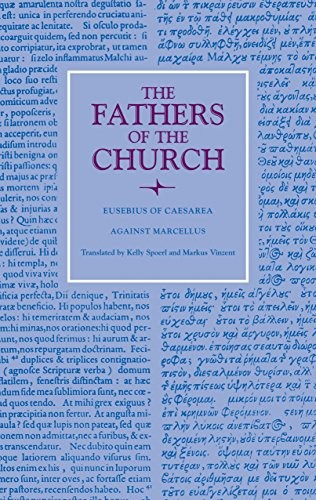
Against Marcellus and On Ecclesiastical Theology
0
0
As an Amazon Associate and affiliate partner, Menrva Books earns from qualifying purchases. Learn more
Author Description
This is the first English translation of the last two theological works of Eusebius of Caesarea, Against Marcellus and On Ecclesiastical Theology. The first text was composed after the deposition of Marcellus of Ancyra in 336 to justify the action of the council fathers in ordering the deposition on the grounds of heresy, contending that Marcellus was "Sabellian" (or modalist) on the Trinity and a follower of Paul of Samosata (hence adoptionist) in Christology. Relying heavily upon extensive quotations from a treatise Marcellus wrote against Asterius the Sophist, this text provides important information about ecclesiastical politics in the period before and just after the Council of Nicea, and endeavors to demonstrate Marcellus's erroneous interpretation of several key biblical passages that had been under discussion since before the council. In doing so, Eusebius criticizes Marcellus's inadequate account of the distinction between the persons of the Trinity, eschatology, and the Church's teaching about the divine and human identities of Christ. On Ecclesiastical Theology, composed circa 338/339 just before Eusebius's death, and perhaps in response to the amnesty for deposed bishops enacted by Constantius after the death of Constantine in 377 and the possibility of Marcellus's return to his see, continues to lay out the criticisms initially put forward in Against Marcellus, again utilizing quotations from Marcellus's book against Asterius. However, we see in this text a much more systematic explanation of Eusebius's objections to the various elements of Marcellus's theology and what he sees as the proper orthodox articulation of those elements. Long overlooked for statements at odds with later orthodoxy, even written off as heretical because allegedly "semi-Arian," recent scholarship has demonstrated the tremendous influence these texts had on the Greek theological tradition in the fourth century, especially on the orthodox understanding of the Trinity. In additio
Menrva's Summary
THE THESIS
This book presents the first English translation of two crucial theological works by Eusebius of Caesarea, offering insights into early Christian debates on the Trinity and Christology. The texts, 'Against Marcellus' and 'On Ecclesiastical Theology,' were written to refute the theological positions of Marcellus of Ancyra, whom Eusebius accused of Sabellianism and adoptionism. By quoting extensively from Marcellus's own writings, Eusebius not only justifies Marcellus's deposition but also critiques his interpretations of key biblical passages concerning the Trinity and the dual nature of Christ. These works provide vital information on ecclesiastical politics and theological discourse in the period surrounding the Council of Nicaea.
THE SCOPE MAP
- A comprehensive English translation of Eusebius of Caesarea's 'Against Marcellus' and 'On Ecclesiastical Theology'.
- Detailed analysis of Eusebius's arguments against Marcellus's Trinitarian and Christological doctrines, specifically his alleged 'Sabellianism' and adoptionism.
- Extensive quotations from Marcellus's own treatise against Asterius the Sophist, providing primary source material for early 4th-century theological disputes.
- Exploration of ecclesiastical politics and theological debates in the pre
- and post-Council of Nicaea era.
- Examination of Eusebius's critique of Marcellus's interpretation of biblical passages relevant to the Trinity and Christ's identity.
- Discussion of the historical reception and influence of Eusebius's texts on the Greek theological tradition, particularly regarding orthodox understandings of the Trinity.
THE AUTHORITY PERSPECTIVE
Recent scholarship has highlighted the significant influence of Eusebius of Caesarea's 'Against Marcellus' and 'On Ecclesiastical Theology' on fourth-century Greek theological thought, particularly in shaping orthodox views on the Trinity. While previously sometimes dismissed or mischaracterized, these texts are now recognized for their crucial role in articulating theological positions of the era. The translation makes these foundational works accessible to a wider audience, facilitating further study of early Christian doctrine and ecclesiastical history. The detailed analysis within the book provides context for understanding the complex theological landscape of the period.
Page Count:
328
Publication Date:
2017-01-01
ISBN-10:
081322991X
ISBN-13:
9780813229911
Non-Fiction
Nature
History
Theology
Christianity
Ancient History
Community Tags
Similar Books