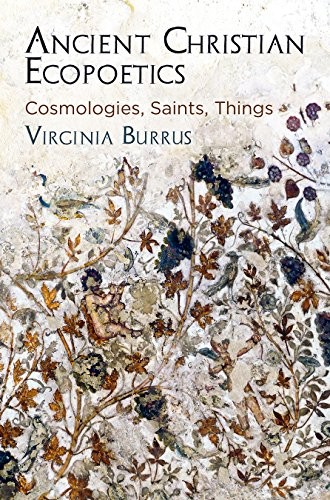
Ancient Christian Ecopoetics
0
0
As an Amazon Associate and affiliate partner, Menrva Books earns from qualifying purchases. Learn more
Author Description
In our age of ecological crisis, what insights—if any—can we expect to find by looking to our past? Perhaps, suggests Virginia Burrus, early Christianity might yield usable insights. Turning aside from the familiar specter of Christianity's human-centered theology of dominion, Burrus directs our attention to aspects of ancient Christian thought and practice that remain strange and alien. Drawn to excess and transgression, in search of transformation, early Christians creatively reimagined the universe and the human, cultivating relationships with a wide range of other beings—animal, vegetable, and mineral; angelic and demonic; divine and earthly; large and small. In Ancient Christian Ecopoetics, Burrus facilitates a provocative encounter between early Christian theology and contemporary ecological thought. In the first section, she explores how the mysterious figure of khora, drawn from Plato's Timaeus, haunts Christian and Jewish accounts of a creation envisioned as varyingly monstrous, unstable, and unknowable. In the second section, she explores how hagiographical literature queers notions of nature and places the very category of the human into question, in part by foregrounding the saint's animality, in part by writing the saint into the landscape. The third section considers material objects, as small as portable relics and icons, as large as church and monastery complexes. Ancient Christians considered all of these animate beings, simultaneously powerful and vulnerable, protective and in need of protection, lovable and loving. Viewed through the shifting lenses of an ancient ecopoetics, Burrus demonstrates how humans both loomed large and shrank to invisibility, absorbed in the rapture of a strange and animate ecology.
Menrva's Summary
THE THESIS
This book investigates how ancient Christian thought and practice can offer insights into contemporary ecological crises. Virginia Burrus challenges the traditional view of Christianity as solely human-centered, instead focusing on aspects of early Christian theology that embrace strangeness, excess, and transformation. The work explores how early Christians reimagined their relationship with a wide array of beings—natural, supernatural, and material—within a dynamic and animate ecology, thereby questioning the very definition of the human.
THE SCOPE MAP
- Exploration of the Platonic figure of khora and its influence on early Christian and Jewish creation narratives, emphasizing instability and unknowability.
- Analysis of hagiographical literature to demonstrate how saints' lives queer notions of nature and challenge human exceptionalism through their animality and integration into landscapes.
- Examination of material objects, from relics to church complexes, as animate beings with their own agency and vulnerability within the Christian worldview.
- Application of an ancient ecopoetics framework to understand how humans were both central and diminished within a vibrant, animate ecology.
- Discussion of early Christian theology's engagement with contemporary ecological thought.
THE AUTHORITY PERSPECTIVE
The book is positioned as a provocative encounter between early Christian theology and contemporary ecological thought, suggesting that ancient texts can yield usable insights into our current ecological crisis. The approach focuses on less familiar aspects of early Christianity, such as its embrace of excess and transformation, and its cultivation of relationships with a diverse range of beings. By examining concepts like khora and the animality of saints, the work aims to re-evaluate the human's place within a broader, animate ecology. The analysis extends to material culture, viewing objects as active participants in this ecological reimagining.
Page Count:
296
Publication Date:
2018-01-01
ISBN-10:
0812250796
ISBN-13:
9780812250794
History
Non-Fiction
Philosophy
Literary Criticism
Ancient History
Ecology
Christianity
Community Tags
Similar Books