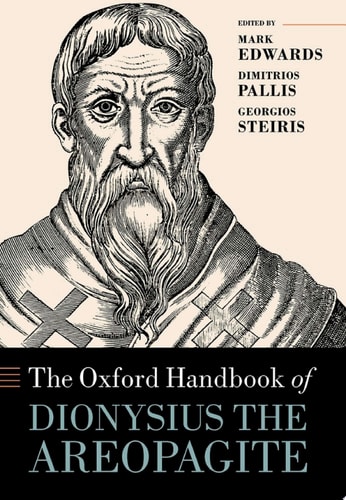
The Oxford Handbook of Dionysius the Areopagite
0
0
As an Amazon Associate and affiliate partner, Menrva Books earns from qualifying purchases. Learn more
Author Description
This Handbook contains forty essays by an international team of experts on the antecedents, the content, and the reception of the Dionysian corpus, a body of writings falsely ascribed to Dionysius the Areopagite, a convert of St Paul, but actually written about 500 AD. The first section contains discussions of the genesis of the corpus, its Christian antecedents, and its Neoplatonic influences. In the second section, studies on the Syriac reception, the relation of the Syriac to the original Greek, and the editing of the Greek by John of Scythopolis are followed by contributions on the use of the corpus in such Byzantine authors as Maximus the Confessor, John of Damascus, Theodore the Studite, Niketas Stethatos, Gregory Palamas, and Gemistus Pletho. In the third section attention turns to the Western tradition, represented first by the translators John Scotus Eriugena, John Sarracenus, and Robert Grosseteste and then by such readers as the Victorines, the early Franciscans, Albert the Great, Aquinas, Bonaventure, Dante, the English mystics, Nicholas of Cusa, and Marsilio Ficino. The contributors to the final section survey the effect on Western readers of Lorenzo Valla's proof of the inauthenticity of the corpus and the subsequent exposure of its dependence on Proclus by Koch and Stiglmayr. The authors studied in this section include Erasmus, Luther and his followers, Vladimir Lossky, Hans Urs von Balthasar, and Jacques Derrida, as well as modern thinkers of the Greek Church. Essays on Dionysius as a mystic and a political theologian conclude the volume.
Menrva's Summary
THE THESIS
This volume investigates the historical origins, philosophical content, and extensive intellectual reception of the Dionysian corpus, a collection of influential theological texts written circa 500 AD. Edited by Marguerite Deslauriers, the handbook compiles forty essays from an international team of scholars. The contributors analyze the corpus's synthesis of Christian theology and Neoplatonic thought, tracing its impact from Byzantine and Syriac traditions through the Western medieval period to modern philosophical discourse.
THE SCOPE MAP
What You Will Find
- Analysis of the genesis of the Dionysian corpus and its Neoplatonic antecedents.
- Examination of the Syriac reception and the editorial work of John of Scythopolis.
- Surveys of the corpus's influence on Byzantine authors and Western thinkers including Aquinas, Dante, and Nicholas of Cusa.
- Investigations into the impact of the 15th-century discovery of the corpus's inauthenticity on later theological and philosophical thought.
Scope Limits
- The volume focuses primarily on the reception history and philosophical context rather than providing a new critical edition of the original Greek text.
- It does not attempt to resolve the identity of the anonymous author beyond the established consensus of a late fifth-century origin.
THE AUTHORITY PERSPECTIVE
Scholars and students of patristics and medieval philosophy frequently cite this handbook as a comprehensive reference for understanding the complex legacy of the Dionysian corpus. The text is noted for its academic rigor and the breadth of its interdisciplinary approach to historical theology.
Page Count:
512
Publication Date:
2022-01-01
Publisher:
OUP Oxford
ISBN-10:
0192538802
ISBN-13:
9780192538802
Religion
History
Philosophy
Theology
Neoplatonism
Patristics
Community Tags
Similar Books