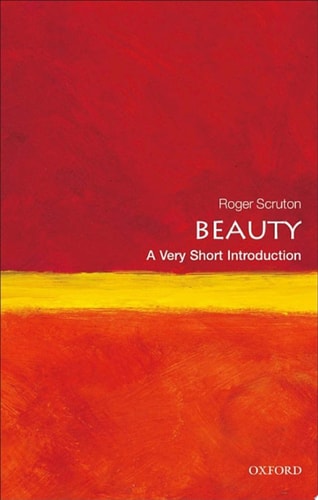
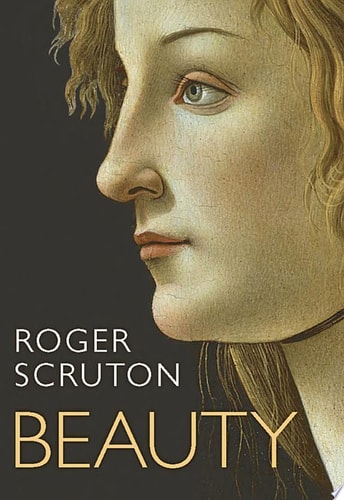
Beauty: A Very Short Introduction
0
0
As an Amazon Associate and affiliate partner, Menrva Books earns from qualifying purchases. Learn more
Author Description
Beauty can be consoling, disturbing, sacred, profane; it can be exhilarating, appealing, inspiring, chilling. It can affect us in an unlimited variety of ways. Yet it is never viewed with indifference. In this Very Short Introduction the renowned philosopher Roger Scruton explores the concept of beauty, asking what makes an object - either in art, in nature, or the human form - beautiful, and examining how we can compare differing judgements of beauty when it is evident all around us that our tastes vary so widely. Is there a right judgement to be made about beauty? Is it right to say there is more beauty in a classical temple than a concrete office block, more in a Rembrandt than in last year's Turner Prize winner? Forthright and thought-provoking, and as accessible as it is intellectually rigorous, this introduction to the philosophy of beauty draws conclusions that some may find controversial, but, as Scruton shows, help us to find greater sense of meaning in the beautiful objects that fill our lives. ABOUT THE SERIES: The Very Short Introductions series from Oxford University Press contains hundreds of titles in almost every subject area. These pocket-sized books are the perfect way to get ahead in a new subject quickly. Our expert authors combine facts, analysis, perspective, new ideas, and enthusiasm to make interesting and challenging topics highly readable.
Menrva's Summary
THE THESIS
This book investigates whether beauty is an objective quality inherent in objects or merely a subjective projection of individual taste. Roger Scruton, a prominent philosopher known for his work in aesthetics and political philosophy, utilizes a framework rooted in traditional Western philosophy to challenge modern relativism. He argues that beauty serves as a vital component of human experience, providing meaning and moral orientation in a world increasingly dominated by utilitarian and functionalist perspectives.
THE SCOPE MAP
What You Will Find
- Philosophical analysis of beauty in art, nature, and the human form
- Comparative evaluation of classical versus contemporary aesthetic standards
- Discussion on the relationship between beauty, morality, and social meaning
Scope Limits
- The text does not provide an exhaustive historical survey of every aesthetic movement
- It does not offer a technical guide for artistic creation or design principles
THE AUTHORITY PERSPECTIVE
Experts and readers frequently note the intellectual density of Scruton's prose despite the book's concise format. It is widely regarded as a foundational entry point for those seeking to understand the philosophical arguments surrounding aesthetic judgment.
Page Count:
233
Publication Date:
2011-01-01
Publisher:
OUP Oxford
ISBN-10:
0191613606
ISBN-13:
9780191613609
Philosophy
Non-Fiction
Aesthetics
Art Theory
Community Tags
Other Editions(4)
Similar Books

Reader Comments
Share Your Thoughts
No comments yet. Be the first to share your thoughts!