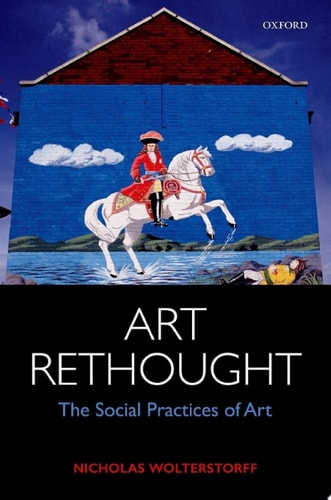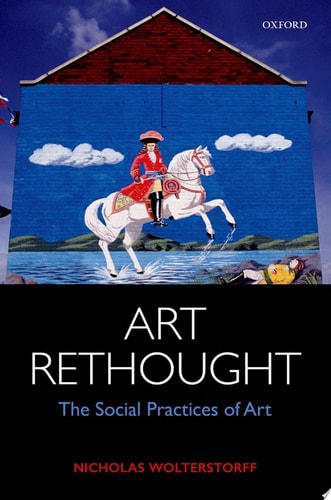
Art Rethought
0
0
As an Amazon Associate and affiliate partner, Menrva Books earns from qualifying purchases. Learn more
Author Description
Human Beings Engage Works Of The Arts In Many Different Ways: They Sing Songs While Working, They Kiss Icons, They Create And Dedicate Memorials. Yet Almost All Philosophers Of Art Of The Modern Period Have Ignored This Variety And Focused Entirely On Just One Mode Of Engagement, Namely, Disinterested Attention. In The First Part Of The Book Nicholas Wolterstorff Asks Why Philosophers Have Concentrated On Just This One Mode Of Engagement. The Answer He Proposes Is That Almost All Philosophers Have Accepted What The Author Calls The Grand Narrative Concerning Art In The Modern World. It Is Generally Agreed That In The Early Modern Period, Members Of The Middle Class In Western Europe Increasingly Engaged Works Of The Arts As Objects Of Disinterested Attention. The Grand Narrative Claims That This Change Represented The Arts Coming Into Their Own, And That Works Of Art, So Engaged, Are Socially Other And Transcendent. Wolterstorff Argues That The Grand Narrative Has To Be Rejected As Not Fitting The Facts. Wolterstorff Then Offers An Alternative Framework For Thinking About The Arts. Central To The Alternative Framework That He Proposes Are The Idea Of The Arts As Social Practices And The Idea Of Works Of The Arts As Having Different Meaning In Different Practices. He Goes On To Use This Framework To Analyse In Some Detail Five Distinct Social Practices Of Art And The Meaning That Works Have Within Those Practices: The Practice Of Memorial Art, Of Art For Veneration, Of Social Protest Art, Of Works Songs, And Of Recent Art-reflexive Art.
Menrva's Summary
THE THESIS
This book investigates why modern philosophers of art have restricted their focus to the singular mode of disinterested attention while ignoring the diverse ways humans actually engage with artistic works. Nicholas Wolterstorff, a prominent philosopher, challenges the prevailing 'Grand Narrative' that suggests disinterested contemplation represents the pinnacle of artistic engagement. He argues that this historical framework is factually inaccurate and proposes an alternative model that views art as a collection of social practices where meaning is derived from context rather than isolation.
THE SCOPE MAP
What You Will Find
- A critique of the 'Grand Narrative' regarding the history of Western art engagement.
- A theoretical framework defining art as a series of social practices.
- Detailed analyses of five specific practices: memorial art, art for veneration, social protest art, work songs, and art-reflexive art.
Scope Limits
- The text does not provide a comprehensive history of all global art forms.
- It does not focus on the technical or formalist analysis of specific art objects outside of their social practice context.
THE AUTHORITY PERSPECTIVE
Scholars and students of aesthetics frequently cite this work as a significant intervention in contemporary philosophy for its shift away from formalist traditions. Readers often note the academic density of the prose, which requires a foundational understanding of modern philosophical discourse to fully grasp the author's arguments.
Page Count:
368
Publication Date:
2015-01-01
Publisher:
Oup Oxford
ISBN-10:
0191064831
ISBN-13:
9780191064838
Non-Fiction
Philosophy
Aesthetics
Art Theory
Sociology of Art
Community Tags
Similar Books