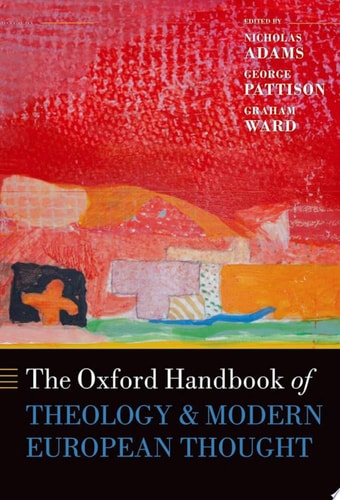
The Oxford Handbook of Theology and Modern European Thought
0
0
As an Amazon Associate and affiliate partner, Menrva Books earns from qualifying purchases. Learn more
Author Description
'modern European Thought' Describes A Wide Range Of Philosophies, Cultural Programmes, And Political Arguments Developed In Europe In The Period Following The French Revolution. Throughout This Period, Many Of The Wide Range Of 'modernisms' (and Anti-modernisms) Had A Distinctly Religious And Even Theological Character-not Least When Religion Was Subjected To The Harshest Criticism. Yet For All The Breadth And Complexity Of Modern European Thought And, In Particular, Its Relations To Theology, A Distinct Body Of Themes And Approaches Recurred In Each Generation. Moreover, Many Of The Issues That Took Intellectual Shape In Europe Are Now Global, Rather Than Narrowly European, And, For Good Or Ill, They Form Part Of Europe's Bequest To The World-from Colonialism And The Economic Theories Behind Globalisation Through To Democracy To Terrorism. This Volume Attempts To Identify And Comment On Some Of The Most Important Of These. The Thirty Chapters Are Grouped Into Six Thematic Parts, Moving From Questions Of Identity And The Self, Through Discussions Of The Human Condition, The Age Of Revolution, The World (both Natural And Technological), And Knowledge Methodologies, Concluding With A Section Looking Explicitly At How Major Theological Themes Have Developed In Modern European Thought. The Chapters Engage With Major Thinkers Including Kant, Hegel, Kierkegaard, Heidegger, Schleiermacher, Nietzsche, Dostoevsky, Barth, Rahner, Tillich, Bonhoeffer, Sartre, De Beauvoir, Wittgenstein, And Derrida, Amongst Many Others. Taken Together, These New Essays Provide A Rich And Reflective Overview Of The Interchange Between Theology, Philosophy And Critical Thought In Europe, Over The Past Two Hundred Years.
Menrva's Summary
THE THESIS
This volume investigates the complex, enduring intersection between theological discourse and the development of modern European thought since the French Revolution. The editors, George Pattison, Graham Ward, and Nicholas Adams, curate a collection of thirty essays that examine how religious themes have persisted, evolved, and influenced intellectual movements despite the rise of secularism and anti-modernist critiques. The work argues that these theological undercurrents are not merely historical artifacts but remain foundational to contemporary global issues, including democracy, globalization, and human identity.
THE SCOPE MAP
What You Will Find
- Analysis of major thinkers including Kant, Hegel, Kierkegaard, Nietzsche, and Derrida.
- Six thematic sections covering identity, the human condition, revolution, the natural world, and methodology.
- Examination of the theological dimensions of political and economic theories.
Scope Limits
- The text focuses primarily on European intellectual history and may not provide exhaustive coverage of non-Western theological developments.
- It does not serve as a comprehensive biography of the listed philosophers, but rather as an analysis of their theological relevance.
THE AUTHORITY PERSPECTIVE
Scholars and students of theology and philosophy frequently cite this handbook as a rigorous, high-level resource for understanding the interplay between religious thought and modern intellectual history. Readers often note the academic density of the prose, which is intended for advanced students and researchers in the humanities.
Page Count:
720
Publication Date:
2013-01-01
Publisher:
Oup Oxford
ISBN-10:
0191626651
ISBN-13:
9780191626654
Philosophy
Religion
European History
Intellectual History
Theology
Modernism
Community Tags
Other Editions(3)

Similar Books
Reader Comments
Share Your Thoughts
No comments yet. Be the first to share your thoughts!