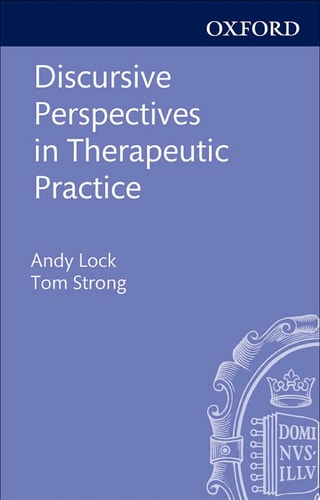
Discursive Perspectives in Therapeutic Practice
0
0
As an Amazon Associate and affiliate partner, Menrva Books earns from qualifying purchases. Learn more
Author Description
For an endeavour that is largely based on conversation it may seem obvious to suggest that psychotherapy is discursive. After all, therapists and clients primarily use talk, or forms of discourse, to accomplish therapeutic aims. However, talk or discourse has usually been seen as secondary to the actual business of therapy - a necessary conduit for exhanging information between therapist and client, but seldom more. Psychotherapy primarily developed by mapping particular experiential domains in ways responsive to human intervention. Only recently though has the role that discourse plays been recognized as a focus in itself for analysis and intervention. Discursive Perspectives in Therapeutic Practice presents an overview of discursive perspectives in therapy, along with an account of their conceptual underpinnings. The book starts by setting out the case for a discursive and relational approach to therapy by justaposing it to the tradition that that leads to the diagnostic approach of the DSM-V and medical psychiatry. It then presents a thorough review of a range of innovative discursive methods, each presented by an authority in their respective area. The book shows how discursive therapies can help people construct a better sense of their world, and move beyond the constraints caused by the cultural preconceptions, opinions, and values the client has about the world. The book makes a unique contribution to the philosophy and psychiatry literature in examining both the philosophical bases of discursive therapy, whilst also showing how discursive perspectives can be applied in real therapeutic situations. The book will be of great value and interest to psychotherapists and psychiatrists wishing to understand, explore, and apply these innovative techniques.
Menrva's Summary
THE THESIS
This book investigates the role of discourse as a primary mechanism in therapeutic practice, challenging the traditional view that talk is merely a secondary conduit for information. Professors Andy Lock and Tom Strong synthesize philosophical foundations with clinical application, arguing that shifting focus toward the discursive construction of reality allows for more effective intervention in a client's world-view. By contrasting this relational approach with the diagnostic frameworks of medical psychiatry, the authors provide a comprehensive rationale for adopting discursive methods in professional settings.
THE SCOPE MAP
What You Will Find
- A comparative analysis between discursive therapy and the DSM-V diagnostic model.
- Theoretical underpinnings of relational and discursive approaches to mental health.
- A collection of innovative discursive methodologies contributed by field experts.
- Practical applications for addressing cultural preconceptions and value systems in therapy.
Scope Limits
- The text does not provide a clinical manual for specific psychiatric disorders.
- It does not focus on pharmacological or biological interventions in psychiatry.
THE AUTHORITY PERSPECTIVE
Experts in the field of philosophy and psychiatry recognize this work as a significant contribution to the literature on discursive therapy. Readers frequently note the academic density of the prose, which is intended for professionals and advanced students seeking to integrate these techniques into their clinical practice.
Page Count:
352
Publication Date:
2012-01-01
Publisher:
OUP Oxford
ISBN-10:
0191625744
ISBN-13:
9780191625749
Philosophy
Psychology
Psychiatry
Allied Health
Medical
Discursive Psychology
Psychotherapy
Community Tags
Other Editions(3)

Similar Books




Reader Comments
Share Your Thoughts
No comments yet. Be the first to share your thoughts!