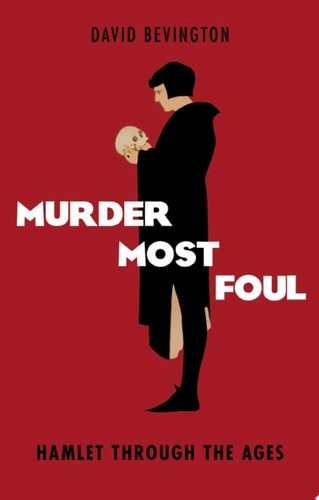
Murder Most Foul: Hamlet Through the Ages
0
0
As an Amazon Associate and affiliate partner, Menrva Books earns from qualifying purchases. Learn more
Author Description
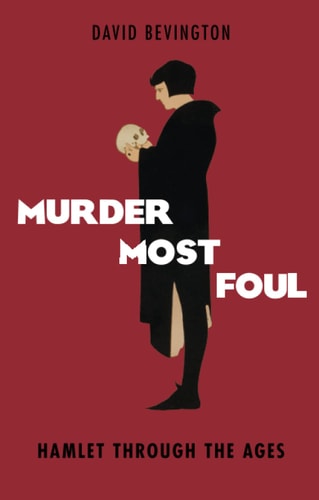
What is it about Hamlet that has made it such a compelling and vital work? Murder Most Foul: Hamlet Through the Ages is an account of Shakespeare's great play from its sources in Scandinavian epic lore to the way it was performed and understood in his own day, and then how the play has fared down to the present: performances on stage, television, and in film, critical evaluations, publishing history, spinoffs, spoofs, musical adaptations, the play's growing reputation, its influence on writers and thinkers, and the ways in which it has shaped the very language we speak. The staging, criticism, and editing of Hamlet, David Bevington argues, go hand in hand over the centuries, to such a remarkable extent that the history of Hamlet can be seen as a kind of paradigm for the cultural history of the English-speaking world.
Menrva's Summary
THE THESIS
This work investigates the enduring cultural significance of Shakespeare's Hamlet by tracing its evolution from ancient Scandinavian lore to its status as a modern global paradigm. David Bevington, a distinguished Shakespearean scholar, utilizes a comprehensive historical framework to analyze how the play's performance, critical reception, and editorial history reflect the broader cultural shifts within the English-speaking world over several centuries.
THE SCOPE MAP
What You Will Find
- Historical analysis of Hamlet's origins in Scandinavian epic lore
- Documentation of performance history across stage, television, and film
- Examination of critical evaluations and publishing history
- Overview of cultural adaptations including musical versions, spoofs, and spinoffs
Scope Limits
- The text does not provide a line-by-line literary analysis of the play's text
- It does not focus on the personal biography of William Shakespeare beyond his role as the play's author
THE AUTHORITY PERSPECTIVE
Scholars and students of Shakespeare frequently cite this work as a definitive resource for understanding the reception history of Hamlet. Experts highlight the text for its ability to synthesize complex cultural data into a coherent narrative regarding the play's influence on Western thought.
Page Count:
250
Publication Date:
2011-01-01
Publisher:
OUP Oxford
ISBN-10:
0191620548
ISBN-13:
9780191620546
Drama
Cultural History
English & College Success
Literary Criticism
English
Theater History
Community Tags
Other Editions(3)
Similar Books