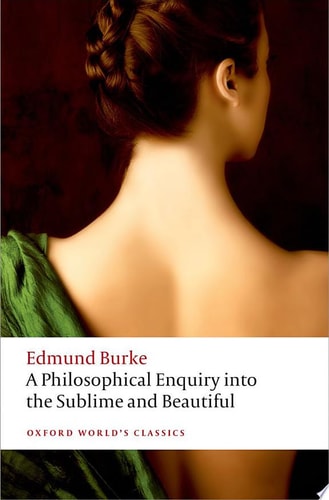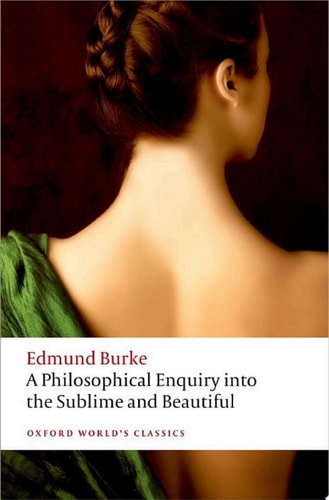
A Philosophical Enquiry into the Origin of our Ideas of the Sublime and the Beautiful
0
0
As an Amazon Associate and affiliate partner, Menrva Books earns from qualifying purchases. Learn more
Author Description
'Pain and pleasure are simple ideas, incapable of definition.' In 1757 the 27-year-old Edmund Burke argued that our aesthetic responses are experienced as pure emotional arousal, unencumbered by intellectual considerations. In so doing he overturned the Platonic tradition in aesthetics that had prevailed from antiquity until the eighteenth century, and replaced metaphysics with psychology and even physiology as the basis for the subject. Burke's theory of beauty encompasses the female form, nature, art, and poetry, and he analyses our delight in sublime effects that thrill and excite us. His revolution in method continues to have repercussions in the aesthetic theories of today, and his revolution in sensibility has paved the way for literary and artistic movements from the Gothic novel through Romanticism, twentieth-century painting, and beyond. In this new edition Paul Guyer conducts the reader through Burke's Enquiry, focusing on its place in the history of aesthetics and highlighting its innovations, as well as its influence on many subsequent authors from Kant and Schiller to Ruskin and Nietzsche. ABOUT THE SERIES: For over 100 years Oxford World's Classics has made available the widest range of literature from around the globe. Each affordable volume reflects Oxford's commitment to scholarship, providing the most accurate text plus a wealth of other valuable features, including expert introductions by leading authorities, helpful notes to clarify the text, up-to-date bibliographies for further study, and much more.
Menrva's Summary
THE THESIS
Edmund Burke investigates the fundamental origins of human aesthetic responses, specifically questioning how and why we perceive objects as either beautiful or sublime. Burke, a prominent political theorist and philosopher, shifts the focus of aesthetics from abstract metaphysics to empirical psychology and physiology. He argues that aesthetic experiences are rooted in visceral emotional arousal rather than intellectual judgment. By examining the biological and psychological triggers of pleasure and pain, he establishes a framework that separates the gentle experience of beauty from the overwhelming, terror-tinged experience of the sublime.
THE SCOPE MAP
What You Will Find
- An empirical analysis of human sensory responses to art, nature, and the human form.
- A distinction between the social, pleasurable nature of beauty and the self-preservation-driven nature of the sublime.
- Historical context regarding the transition from Platonic aesthetics to modern psychological inquiry.
Scope Limits
- The text does not provide a comprehensive history of art, focusing instead on the physiological mechanisms of perception.
- It does not address modern neuroscientific findings, as it is grounded in eighteenth-century philosophical inquiry.
THE AUTHORITY PERSPECTIVE
Scholars recognize this work as a foundational text that significantly influenced the development of Romanticism and the aesthetic theories of Kant and Nietzsche. Readers often note the dense, analytical nature of the prose, which requires careful attention to Burke's specific definitions of emotional states.
Page Count:
198
Publication Date:
2015-01-01
Publisher:
OUP Oxford
ISBN-10:
0191645982
ISBN-13:
9780191645983
Non-Fiction
Psychology
Philosophy
Aesthetics
Literary Criticism