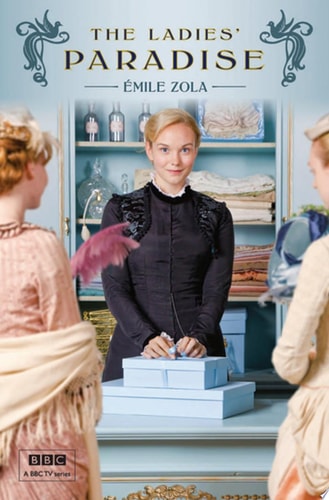
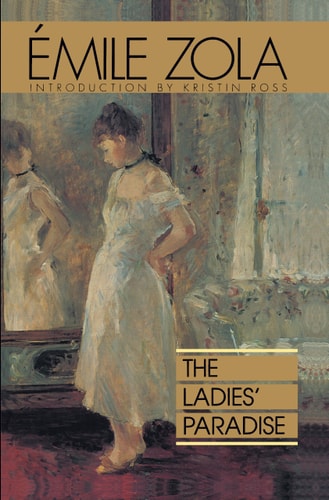
The Ladies' Paradise
0
0
As an Amazon Associate and affiliate partner, Menrva Books earns from qualifying purchases. Learn more
Author Description
The Ladies' Paradise (au Bonheur Des Dames) Recounts The Spectacular Development Of The Modern Department Store In Late Nineteenth Century Paris. The Store Is A Symbol Of Capitalism, Of The Modern City, And Of The Bourgeois Family; It Is Emblematic Of Consumer Culture And The Changes In Sexual Attitudes And Class Relations Taking Place At The End Of The Century. Octave Mouret, The Store's Owner-manager, Masterfully Exploits The Desires Of His Female Customers. In His Private Life As Much As In Business He Is The Great Seducer. But When He Falls In Love With The Innocent Denise Baudu, He Discovers She Is The Only One Of The Salesgirls Who Refuses To Be Commodified. This New Translation Of The Eleventh Book In The Rougon-macquart Cycle Captures The Spirit Of One Of Zola's Greatest Novels Of The Modern City. About The Series: For Over 100 Years Oxford World's Classics Has Made Available The Widest Range Of Literature From Around The Globe. Each Affordable Volume Reflects Oxford's Commitment To Scholarship, Providing The Most Accurate Text Plus A Wealth Of Other Valuable Features, Including Expert Introductions By Leading Authorities, Helpful Notes To Clarify The Text, Up-to-date Bibliographies For Further Study, And Much More.
Menrva's Summary
THE PULSE
The rapid expansion of a Parisian department store forces a collision between the ruthless mechanics of modern consumerism and the personal integrity of a young shop assistant. Denise Baudu arrives in Paris seeking employment and finds herself navigating the predatory environment of The Ladies' Paradise, a retail empire managed by the ambitious Octave Mouret. Mouret views his female clientele as subjects to be manipulated for profit, yet he finds his own motivations challenged by Denise, who remains resistant to his influence. The narrative follows their evolving dynamic against the backdrop of a changing urban landscape, utilizing a third-person perspective to observe the shifting social hierarchies of the late nineteenth century.
INSIDE THE PAGES
- Detailed depiction of the rise of retail capitalism in Paris
- Exploration of the psychological manipulation of consumer desire
- Contrast between the small shopkeeper and the modern department store
- Examination of gender dynamics in the workplace
- Analysis of class mobility and social stratification
- Vivid sensory descriptions of merchandise and store displays
- Character study of the charismatic yet calculating Octave Mouret
- Focus on the internal moral fortitude of the protagonist
THE COLLECTIVE ECHO
Readers and critics frequently highlight the precision with which Zola captures the transformation of the urban environment during the industrial age. Discussion often centers on the store itself as a living character, reflecting the broader societal shifts toward mass consumption and the commodification of human desire. Many observers note the effectiveness of the prose in balancing the grand scale of economic change with the intimate development of the central characters. The novel is widely regarded for its meticulous research and its ability to present a neutral, observational view of the bourgeois world. Readers often appreciate how the narrative avoids moralizing, instead allowing the mechanics of the market to dictate the tension of the story.
Page Count:
480
Publication Date:
2012-01-01
Publisher:
Oup Oxford
ISBN-10:
0191663484
ISBN-13:
9780191663482
French literature
Realism
Classic Literature
Social Commentary
Historical
Urban
Community Tags
Other Editions(6)

Similar Books












Reader Comments
Share Your Thoughts
No comments yet. Be the first to share your thoughts!