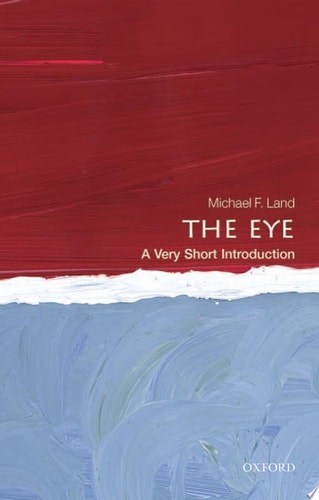
The Eye: A Very Short Introduction
0
0
As an Amazon Associate and affiliate partner, Menrva Books earns from qualifying purchases. Learn more
Author Description
The Eye Is One Of The Most Remarkable Achievements Of Evolution, And Has Evolved Up To 40 Times In Different Parts Of The Animal Kingdom. In Humans, Vision Is The Most Important Sense, And Much Of The Brain Is Given Over To The Processing Of Visual Information. In This Very Short Introduction, Michael Land Describes The Evolution Of Vision And The Variety Of Eyes Found In Both Humans And Animals. He Explores The Evolution Of Colour Vision In Primates And The Workings Of The Human Eye, To Consider How That Contributes To Our Visual Ability. He Explains How We See In Three Dimensions And The Basic Principles Of Visual Perception, Including Our Impressive Capacity For Pattern Recognition And The Ability Of Vision To Guide Action. About The Series: The Very Short Introductions Series From Oxford University Press Contains Hundreds Of Titles In Almost Every Subject Area. These Pocket-sized Books Are The Perfect Way To Get Ahead In A New Subject Quickly. Our Expert Authors Combine Facts, Analysis, Perspective, New Ideas, And Enthusiasm To Make Interesting And Challenging Topics Highly Readable.
Menrva's Summary
THE THESIS
This book investigates the evolutionary development and functional mechanics of the eye across the animal kingdom. Author Michael F. Land, a distinguished expert in the field of vision, utilizes biological data and evolutionary theory to explain how diverse visual systems emerged. He provides a framework for understanding how the human eye processes information and how vision serves as a primary driver for complex behavior.
THE SCOPE MAP
What You Will Find
- Evolutionary history of the eye across various species
- Analysis of primate colour vision development
- Mechanics of human visual perception and three-dimensional sight
- Principles of pattern recognition and visual guidance of action
Scope Limits
- Does not provide a comprehensive clinical guide to human eye diseases or surgical interventions
- Does not cover the philosophical implications of consciousness beyond basic visual processing
THE AUTHORITY PERSPECTIVE
Experts and readers frequently cite this text as a highly accessible entry point for understanding the biological complexity of vision. The prose is noted for its clarity, effectively distilling dense evolutionary concepts into a format suitable for students and interested laypeople.
Page Count:
144
Publication Date:
2014-01-01
Publisher:
Oup Oxford
ISBN-10:
0191669792
ISBN-13:
9780191669798
Science
Non-Fiction
Ophthalmology
Biology
Evolutionary Biology
Neuroscience