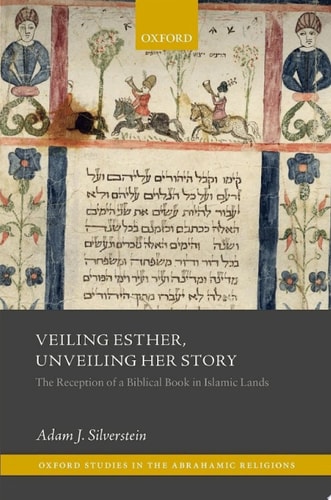
Veiling Esther, Unveiling Her Story: The Reception of a Biblical Book in Islamic Lands
0
0
As an Amazon Associate and affiliate partner, Menrva Books earns from qualifying purchases. Learn more
Author Description
Veiling Esther, Unveiling Her Story: The Reception of a Biblical Book in Islamic Lands' examines the ways in which the Biblical Book of Esther was read, understood, and used in Muslim lands, from ancient to modern times. It focuses on case studies covering works from various periods and regions of the Muslim world, including the Qur'an, pre-modern historical chronicles and literary works, the writings of a nineteenth-century Shia feminist, a twentieth-century Iranian encyclopaedia, and others. These case studies demonstrate that Muslim sources contain valuable materials on Esther, which shed light both on the Esther story itself and on the Muslim peoples and cultures that received it. Adam J. Silverstein argues that Muslim sources preserve important pre-Islamic materials on Esther that have not survived elsewhere, some of which offer answers to ancient questions about Esther, such as the meaning of Haman's epithet in the Greek versions of the story, the reason why Mordecai refused to prostrate before Haman, and the literary context of the 'plot of the eunuchs' to kill the Persian king. Throughout the book, Silverstein shows how each author's cultural and religious background influenced his or her understanding and retelling of the Esther story. In particular, he highlights that Persian Muslims (and Jews) were often forced to reconcile or choose between the conflicting historical narratives provided by their religious and cultural heritages respectively.
Menrva's Summary
THE THESIS
This work investigates how the Biblical Book of Esther was interpreted, adapted, and utilized within Islamic cultural and religious contexts from antiquity to the modern era. Adam J. Silverstein, a scholar of Islamic history, employs a comparative analysis of diverse textual sources to argue that Muslim traditions preserve unique, pre-Islamic insights into the Esther narrative. By examining how authors from varying historical periods and regions engaged with the text, the book demonstrates that these sources offer critical solutions to long-standing historical and literary questions regarding the original biblical account.
THE SCOPE MAP
What You Will Find
- Analysis of the Qur'an, pre-modern chronicles, and literary works regarding Esther.
- Examination of nineteenth-century Shia feminist writings and twentieth-century Iranian encyclopedic entries.
- Investigation into the cultural reconciliation between Persian identity and religious heritage.
Scope Limits
- The study does not provide a comprehensive history of the Book of Esther in Western or European traditions.
- It does not attempt to reconstruct the original historical events of the Persian court beyond the textual evidence provided by the sources.
THE AUTHORITY PERSPECTIVE
Scholars in the field of religious studies and Middle Eastern history identify this text as a significant contribution to the understanding of inter-religious textual transmission. Readers frequently note the academic rigor and the depth of the comparative analysis presented by the author.
Page Count:
0
Publication Date:
1900-01-01
Publisher:
Oxford University Press
ISBN-10:
0191838713
ISBN-13:
9780191838712
Religion
History
Literary Criticism
Middle Eastern
Islamic Studies
Community Tags
Other Editions(3)

Similar Books