Peacekeeping in the Midst of War
0
0
As an Amazon Associate and affiliate partner, Menrva Books earns from qualifying purchases. Learn more
Author Description
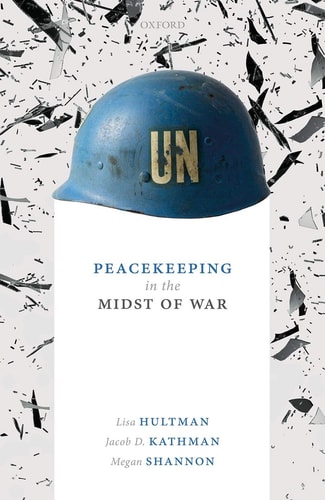
Are United Nations peacekeeping missions effective at reducing violence in civil wars? Although UN peacekeeping is a notable intervention tool, the international community lacks systematic knowledge of how well it mitigates civil war violence. Given that UN peacekeeping is increasingly used in the midst of war, this is a significant research gap with direct policy relevance. This book systematically explores if and how the capacity and constitution of UN peacekeeping missions affect the amount of violence in civil conflicts. It argues that peacekeeping effectiveness needs to be assessed in relative terms, theorizing that more robust missions are increasingly capable of addressing combatant incentives for employing violence. The authors conduct large-n analyses of the number of combatants and civilians killed during each month for all civil wars globally from 1992 to 2014, measuring the capacity and constitution of UN missions with unique data on the number and type of peacekeeping personnel deployed. The analyses reveal that increasing UN military troop and police personnel deployed to a conflict significantly reduces violence against civilians, and increasing UN military troop personnel significantly mitigates battle-related violence. By contrast, smaller missions and missions composed of observers are not associated with reduced violence. The book complements the large-n analyses with qualitative explorations of peacekeeping mechanisms on violence in Côte d'Ivoire and the Democratic Republic of Congo. The authors conclude that while peacekeeping is not without detriments, it is an effective tool of violence reduction.
Menrva's Summary
THE THESIS
This book investigates whether United Nations peacekeeping missions effectively reduce violence in civil wars and identifies the specific mission characteristics that correlate with success. The authors, Jacob D. Kathman, Lisa Hultman, and Megan Shannon, utilize a rigorous empirical framework to assess how the capacity and composition of peacekeeping forces influence combatant behavior. They argue that mission robustness is a critical determinant of effectiveness, positing that larger, better-equipped deployments are more successful at mitigating both battle-related violence and civilian casualties.
THE SCOPE MAP
What You Will Find
- Large-n statistical analysis of civil wars globally from 1992 to 2014
- Quantitative data on the number and type of peacekeeping personnel deployed
- Qualitative case studies focusing on Côte d'Ivoire and the Democratic Republic of Congo
- Theoretical framework regarding combatant incentives and intervention capacity
Scope Limits
- The study focuses primarily on the reduction of violence rather than long-term political stability or post-conflict state-building
- The analysis is restricted to the period between 1992 and 2014
THE AUTHORITY PERSPECTIVE
Experts recognize this work as a significant contribution to the study of international intervention due to its systematic empirical approach. Readers frequently note the academic density of the prose, which makes it a valuable resource for researchers and policy analysts interested in conflict mitigation.
Page Count:
236
Publication Date:
2020-01-01
Publisher:
Oxford University Press
ISBN-10:
0191880736
ISBN-13:
9780191880735
International relations
Conflict Studies
Military History
Peacekeeping
Civil War
Armed Forces
Community Tags
Other Editions(3)
Similar Books
Reader Comments
Share Your Thoughts
No comments yet. Be the first to share your thoughts!