
The Interpretation of Dreams
0
0
As an Amazon Associate and affiliate partner, Menrva Books earns from qualifying purchases. Learn more
Author Description
One hundred years ago Sigmund Freud published The Interpretations of Dreams, a book that, like Darwin's The Origin of Species, revolutionized our understanding of human nature. Now this groundbreaking new translation--the first to be based on the original text published in November 1899--brings us a more readable, more accurate, and more coherent picture of Freud's masterpiece.The first edition of The Interpretation of Dreams is much shorter than its subsequent editions; each time the text was reissued, from 1909 onwards, Freud added to it. The most significant, and in many ways the most unfortunate addition, is a 50-page section devoted to the kind of mechanical reading of dream symbolism--long objects equal male genitalia, etc.--that has gained popular currency and partially obscured Freud's more profound insights into dreams. In the original version presented here, Freud's emphasis falls more clearly on the use of words in dreams and on the difficulty of deciphering them. Without the strata of later additions, readers will find here a clearer development of Freud's central ideas--of dream as wish-fulfillment, of the dream's manifest and latent content, of the retelling of dreams as a continuation of the dreamwork, and much more. Joyce Crick's translation is lighter and faster-moving than previous versions, enhancing the sense of dialogue with the reader, one of Freud's stylistic strengths, and allowing us to follow Freud's theory as it evolved through difficult cases, apparently intractable counter-examples, and fascinating analyses of Freud's own dreams.The restoration of Freud's classic is a major event, giving us in a sense a new work by one of this century' most startling, original, and influential thinkers.
Menrva's Summary
THE THESIS
This work investigates the fundamental mechanisms of the human unconscious by proposing that dreams serve as the primary pathway to understanding repressed desires and wish-fulfillment. Sigmund Freud, a physician and the founder of psychoanalysis, utilizes his own clinical observations and personal dream analysis to construct a framework for interpreting the latent content hidden beneath the manifest imagery of the dreaming mind. By examining the linguistic and symbolic structures of dreams, Freud argues that the dream-work functions as a complex psychological process that disguises unconscious impulses to preserve the state of sleep.
THE SCOPE MAP
What You Will Find
- A foundational theory of wish-fulfillment as the driving force of dreams
- Analysis of the distinction between manifest content and latent thoughts
- Examination of the dream-work processes including condensation and displacement
- Case studies and personal dream accounts used as primary evidence
Scope Limits
- This text does not cover the later, more mechanical interpretations of dream symbolism added in subsequent editions
- It does not address modern neurobiological theories of sleep or REM cycles
THE AUTHORITY PERSPECTIVE
Experts recognize this text as a foundational document in the history of psychology that established the clinical methodology for psychoanalysis. Readers frequently note the academic density of the prose, which requires careful attention to follow Freud's evolving theoretical arguments.
Page Count:
512
Publication Date:
1999-11-18
Publisher:
Oxford University Press
ISBN-10:
0192100491
ISBN-13:
9780192100498
Non-Fiction
Psychology
Science
Philosophy
Psychoanalysis
Community Tags
Other Editions(26)

Mint Editions
2026
Default edition
Prakash Books
2023

Lushena Books
2023

1828 Press
2022

Independently Published
2021

Tantor and Blackstone Publishing
2021

True Sign Publishing House
2021

Flame Tree Publishing
2020

Repro India Limited
2020

Wiley Professional Development (P&T)
2020

Independently Published
2019

Creative Media Partners, LLC
2018

Independently Published
2017

CreateSpace Independent Publishing Platform
2017

CreateSpace Independent Publishing Platform
2016

Prakash Books
2016

CreateSpace Independent Publishing Platform
2016

CreateSpace Independent Publishing Platform
2016
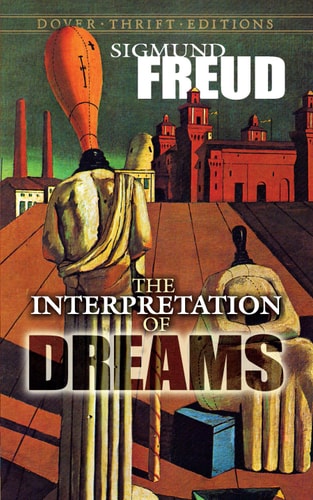
Dover Publications
2015

CreateSpace Independent Publishing Platform
2015

Random House Digital Inc.
2014

Hachette
2010

Oxford University Press
2008

NuVision Publications
2004
Oxford University Press
1999

China Social Sciences Publishing House
1999
Similar Books














Reader Comments
Share Your Thoughts
No comments yet. Be the first to share your thoughts!