
Resurrection
0
0
As an Amazon Associate and affiliate partner, Menrva Books earns from qualifying purchases. Learn more
Author Description
Resurrection, the last full-length novel written by Leo Tolstoy, was published in 1899 after ten years in the making. A humanitarian cause—the pacifist Doukhobor sect, persecuted by the Russian government, needed funds to emigrate to Canada—prompted Tolstoy to finish the novel and dedicate its ensuing revenues to alleviate their plight. Ultimately, Tolstoy’s actions were credited with helping hundreds of Doukhobors emigrate to Canada. The novel centers on the relationship between Nekhlúdoff, a Russian landlord, and Máslova, a prostitute whose life took a turn for the worse after Nekhlúdoff wronged her ten years prior to the novel’s events. After Nekhlúdoff happens to sit in the jury for a trial in which Máslova is accused of poisoning a merchant, Nekhlúdoff begins to understand the harm he has inflicted upon Máslova—and the harm that the Russian state and society inflicts upon the poor and marginalized—as he embarks on a quest to alleviate Máslova’s suffering. Nekhlúdoff’s process of spiritual awakening in Resurrection serves as a framing for many of the novel’s religious and political themes, such as the hypocrisy of State Christianity and the injustice of the penal system, which were also the subject of Tolstoy’s nonfiction treatise on Christian anarchism, The Kingdom of God Is Within You. The novel also explores the “single tax” economic theory propounded by the American economist Henry George, which drives a major subplot in the novel concerning the management of Nekhlúdoff’s estates.
Menrva's Summary
THE PULSE
A wealthy nobleman’s chance encounter with a woman he once exploited forces him to confront his own moral corruption and the systemic failures of the Russian legal system. Prince Dmitri Nekhlúdoff serves as a juror in a murder trial, only to discover the defendant is Kátyusha Máslova, a woman he seduced and abandoned years earlier. Driven by guilt and a desire for redemption, he attempts to secure her release and improve her conditions, while simultaneously grappling with his own complicity in a society built on inequality. The narrative follows his internal transformation as he navigates the rigid hierarchies of the Tsarist state and the harsh realities of the penal system.
INSIDE THE PAGES
- Third-person omniscient narrative perspective
- Satirical critique of the Russian Orthodox Church
- Detailed examination of the 19th-century judicial process
- Exploration of Henry George’s single tax economic theory
- Focus on the psychological evolution of the protagonist
- Depiction of the squalor within the Russian prison system
- Contrast between aristocratic privilege and peasant suffering
- Integration of Christian anarchist philosophy
THE COLLECTIVE ECHO
Readers and critics frequently identify this work as a profound synthesis of Tolstoy’s late-life moral and political convictions. Discussion often centers on the stark contrast between the protagonist’s spiritual awakening and the institutionalized hypocrisy of the state. Many observers highlight the novel’s unflinching portrayal of human suffering, noting that the pacing is intentionally deliberate to emphasize the weight of the protagonist's ethical dilemmas. While some readers find the didactic elements prominent, others argue that these philosophical inquiries are essential to the narrative’s impact. The text remains a primary point of reference for those examining the intersection of literature and social reform.
Page Count:
476
Publication Date:
1916-12-01
Publisher:
Oxford University Press
ISBN-10:
0192502093
ISBN-13:
9780192502094
Political fiction
Classic Literature
Philosophical
Russian
Social Realism
Community Tags
Other Editions(39)

Atlas Vista Publisher
2023
Default edition
Independently published
2023

Zinc Read
2023

Zinc Read
2023

Creative Media Partners, LLC
2022

True Sign Publishing House
2021

Independently Published
2021

Independently published
2020

Prince Classics
2019

CreateSpace Independent Publishing Platform
2018

CreateSpace Independent Publishing Platform
2018
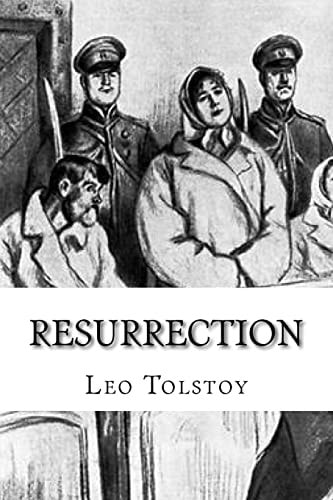
CreateSpace Independent Publishing Platform
2018
Creative Media Partners, LLC
2018

CreateSpace Independent Publishing Platform
2017

CreateSpace Independent Publishing Platform
2017
Independently Published
2017

CreateSpace Independent Publishing Platform
2017

CreateSpace Independent Publishing Platform
2017

CreateSpace Independent Publishing Platform
2017

CreateSpace Independent Publishing Platform
2016

CreateSpace Independent Publishing Platform
2016

CreateSpace Independent Publishing Platform
2016

CreateSpace Independent Publishing Platform
2015
Murine Publications LLC
2015

Creative Media Partners, LLC
2015

Bibliolife DBA of Bibilio Bazaar II LLC
2015

Creative Media Partners, LLC
2015

Creative Media Partners, LLC
2015

Fb&c Limited
2015
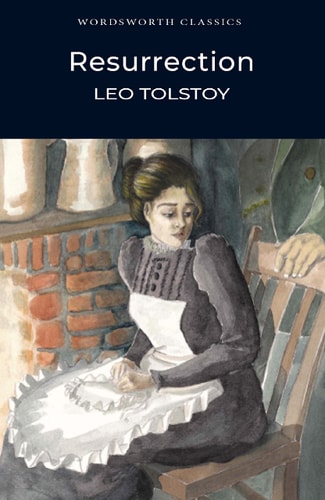
Wordsworth Editions, Limited
2014
Kessinger Publishing, LLC
2010

Transaction Publishers
2009
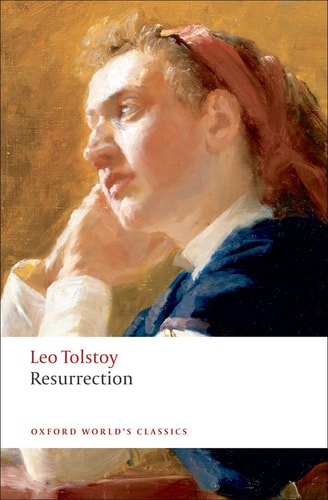
Oxford University Press
2009

CreateSpace Independent Publishing Platform
2009
BiblioBazaar
2007

Kessinger Publishing, LLC
2005
Oxford University Press
1994
Penguin Books Limited
1966
Oxford University Press
1916
Similar Books




Reader Comments
Share Your Thoughts
No comments yet. Be the first to share your thoughts!