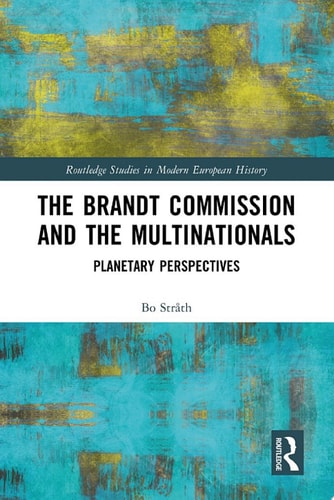
The Brandt Commission and the Multinationals
0
0
As an Amazon Associate and affiliate partner, Menrva Books earns from qualifying purchases. Learn more
Author Description
Set against the backdrop of dramatic world order transformations across the 1970s and 1980s, this book examines the competing planetary perspectives of the Brandt Commission and the multinationals, arguing that the missed opportunities of these decades created a path for contemporary political and economic crises. At the Global South’s request for a New International Economic Order, the Brandt Commission, chaired by Willy Brandt, was appointed in 1977. The commission, with a goal to formulate arguments on how to close the gap between the North and South, developed a planetary perspective grounded in economic redistribution, ecological considerations, and disarmament. The multinationals, at that time, a new kind of business corporation, repressed Brandt’s vision by seeking freedom from political monitoring. This book discusses the ways that global corporations created facts that changed the world and the preconditions of politics. It moves beyond existing research that considers the competition merely a theoretical clash between Keynesianism and neoliberalism. Featuring a thorough analysis of the decades’ trends and a new interview with Shridath Ramphal, the Commission’s unofficial vice chair, this is a timely volume for students and researchers of international relations, political science, and contemporary history.
Menrva's Summary
THE THESIS
The Brandt Commission and the Multinationals examines the ideological clash between the Brandt Commission's vision for global economic redistribution and the multinationals' pursuit of freedom from political oversight during the transformative decades of the 1970s and 1980s. The book argues that the failure to implement the Commission's proposals for a New International Economic Order, which aimed to close the gap between the Global North and South through economic redistribution, ecological considerations, and disarmament, created the conditions for contemporary political and economic crises. It details how global corporations actively shaped world events and political preconditions, moving beyond simplistic theoretical debates between Keynesianism and neoliberalism. The analysis is grounded in the trends of the era and includes a new interview with Shridath Ramphal, the Commission's unofficial vice chair.
THE SCOPE MAP
- Analysis of the Brandt Commission's proposal for a New International Economic Order.
- Examination of the role and perspectives of multinational corporations in the 1970s and 1980s.
- Discussion of the concept of a 'planetary perspective' grounded in economic redistribution, ecological considerations, and disarmament.
- Exploration of how global corporations influenced political monitoring and shaped world events.
- Critique of existing research that frames the competition solely as a theoretical clash between Keynesianism and neoliberalism.
- Inclusion of a new interview with Shridath Ramphal, the Brandt Commission's unofficial vice chair.
- Contextualization of the 1970s and 1980s within a backdrop of dramatic world order transformations.
THE AUTHORITY PERSPECTIVE
This volume is positioned as a timely contribution for students and researchers in international relations, political science, and contemporary history. The book's focus on the missed opportunities of the 1970s and 1980s suggests an argument that resonates with current global challenges. By analyzing the competing planetary perspectives of the Brandt Commission and multinational corporations, it aims to offer a nuanced understanding of historical economic and political developments. The inclusion of an interview with Shridath Ramphal adds a primary source dimension to its scholarly approach.
Page Count:
406
Publication Date:
2023-02-11
Publisher:
Taylor & Francis
ISBN-10:
1000834123
ISBN-13:
9781000834123
Non-Fiction
History
International relations
Contemporary History
Economic History
Community Tags
Similar Books