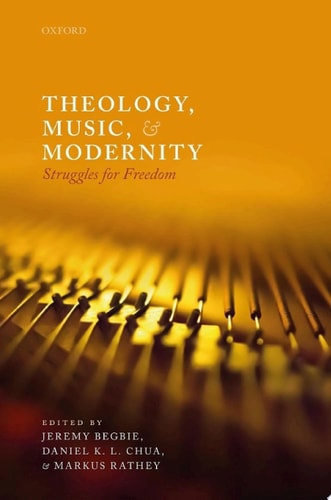
Theology, Music, and Modernity: Struggles for Freedom
0
0
As an Amazon Associate and affiliate partner, Menrva Books earns from qualifying purchases. Learn more
Author Description
Theology, Music, and Modernity addresses the question: how can the study of music contribute to a theological reading of modernity? It has grown out of the conviction that music has often been ignored in narrations of modernity's theological struggles. Featuring contributions from an international team of distinguished theologians, musicologists, and music theorists, the volume shows how music--and discourse about music--has remarkable powers to bring to light the theological currents that have shaped modern culture. It focuses on the concept of freedom, concentrating on the years 1740-1850, a period when freedom--especially religious and political freedom-became a burning matter of concern in virtually every stratum of Western society. The collection is divided into four sections, each section focusing on a key phenomenon of this period--the rise of the concept of 'revolutionary' freedom; the move of music from church to concert hall; the cry for eschatological justice in the work of black hymn-writer and church leader Richard Allen; and the often fierce tensions between music and language. There is a particular concern to draw on a distinctively 'Scriptural imagination' (especially the theme of New Creation) in order to elicit the key issues at stake, and to suggest constructive ways forward for a contemporary Christian theological engagement with the legacies of modernity today.
Menrva's Summary
THE THESIS
This volume investigates how the study of music can contribute to a theological understanding of the cultural and political shifts defining modernity. The text is a collaborative effort by an international group of theologians, musicologists, and theorists who argue that music has been historically overlooked in theological discourse. By examining the period between 1740 and 1850, the contributors analyze how musical evolution and discourse reflect the era's intense preoccupation with religious and political freedom.
THE SCOPE MAP
What You Will Find
- Analysis of the transition of music from ecclesiastical settings to the public concert hall.
- Examination of the concept of 'revolutionary' freedom within musical composition.
- Case studies on the work of Richard Allen regarding eschatological justice.
- Exploration of the tension between musical expression and linguistic structures.
Scope Limits
- The analysis is strictly confined to the historical period of 1740-1850.
- The work focuses primarily on Western cultural contexts and Christian theological frameworks.
THE AUTHORITY PERSPECTIVE
Scholars and theologians recognize this collection as a significant interdisciplinary contribution to the study of modern culture. Readers frequently note the academic density of the prose and the specialized nature of the theological arguments presented.
Page Count:
397
Publication Date:
2021-01-01
Publisher:
OUP Oxford
ISBN-10:
0192585703
ISBN-13:
9780192585707
Philosophy
Religion
Cultural History
Christianity
Musicology
Modernity
Theology
Community Tags
Similar Books