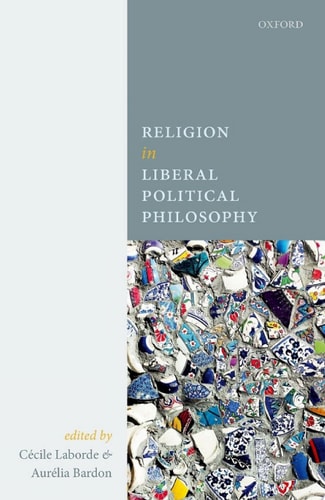
Religion in Liberal Political Philosophy
0
0
As an Amazon Associate and affiliate partner, Menrva Books earns from qualifying purchases. Learn more
Author Description
Until now, there has been no direct and extensive engagement with the category of religion from liberal political philosophy. Over the last thirty years or so, liberals have tended to analyze religion under proximate categories such as 'conceptions of the good' (in debates about neutrality) or 'culture' (in debates about multiculturalism). US constitutional lawyers and French political theorists both tackled the category of religion head-on (under First Amendment jurisprudence and the political tradition of laïcité, respectively) but neither of these specialized national discourses found their way into mainstream liberal political philosophy. This is somewhat paradoxical because key liberal notions (state sovereignty, toleration, individual freedom, the rights of conscience, public reason) were elaborated as a response to 17th Century European Wars of Religion, and the fundamental structure of liberalism is rooted in the western experience of politico-religious conflict. So a reappraisal of this tradition - and of its validity in the light of contemporary challenges - is well overdue. This book offers the first extensive engagement with religion from liberal political philosophers. The volume analyzes, from within the liberal philosophical tradition itself, the key notions of conscience, public reason, non-establishment, and neutrality. Insofar as the contemporary religious revival is seen as posing a challenge to liberalism, it seems more crucial than ever to explore the specific resources that the liberal tradition has to answer it.
Menrva's Summary
THE THESIS
This volume investigates the historical and conceptual neglect of religion as a distinct category within liberal political philosophy. Aurelia Bardon and Cécile Laborde, both scholars in political theory, examine why liberal thinkers have historically subsumed religion under broader categories like culture or conceptions of the good. They argue that because liberalism originated as a response to religious conflict, a direct reappraisal of how liberal frameworks address religious practice and conscience is necessary for navigating contemporary political challenges.
THE SCOPE MAP
What You Will Find
- Analysis of core liberal concepts including conscience, public reason, non-establishment, and neutrality
- A comparative look at US First Amendment jurisprudence and French laïcité
- A critique of how 17th-century European religious wars shaped modern liberal structures
Scope Limits
- The text does not provide a comprehensive history of global religious movements
- It does not offer a practical policy guide for specific legislative reforms
THE AUTHORITY PERSPECTIVE
Scholars and political theorists identify this work as a significant intervention in the field, noting its success in bridging the gap between national legal traditions and abstract political philosophy. Readers frequently highlight the academic rigor of the prose and the authors' ability to synthesize complex historical contexts with contemporary normative debates.
Page Count:
356
Publication Date:
2017-01-01
Publisher:
OUP Oxford
ISBN-10:
0192513214
ISBN-13:
9780192513212
Philosophy
Religion
Ethics
Political Philosophy
Liberalism
Philosophy & Religion
Community Tags
Similar Books