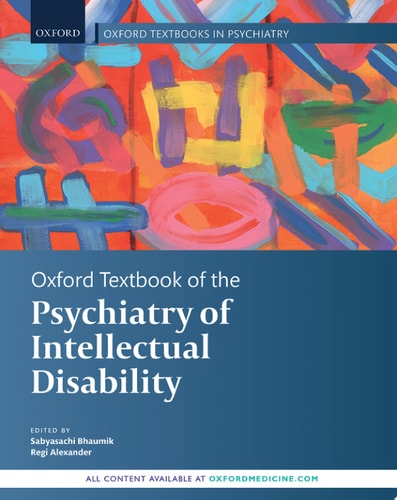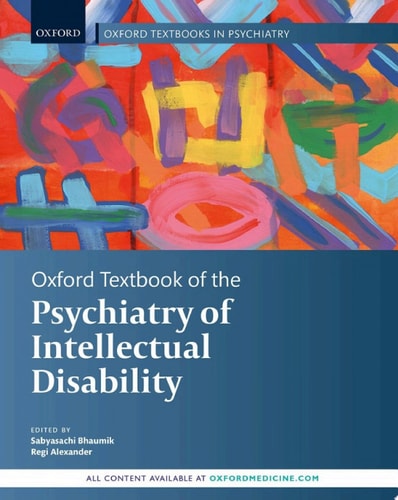
Oxford Textbook of the Psychiatry of Intellectual Disability
0
0
As an Amazon Associate and affiliate partner, Menrva Books earns from qualifying purchases. Learn more
Author Description
Intellectual Disability (ID) describes a lifelong condition of heterogeneous aetiology, associated with the impairment of intellectual functioning (IQ < 70), significant impairment of adaptive skills, and onset before the age of 18 years. People with ID experience significant physical and mental health problems like associated sensory/motor impairments and epilepsy, some of which are contributed to by underlying primary causes. Psychiatric problems are also three times more common in people with ID in comparison to the general population. The psychiatry of ID is a core part of training to be a psychiatrist yet there are limited resources on this topic aimed at both trainees and practising clinicians alike. Oxford Textbook of the Psychiatry of Intellectual Disability bridges this gap by providing up-to-date evidence-based content on the assessment, diagnosis, and management of psychiatry in people with ID. Featuring 28 chapters written by international experts in the field, the Oxford Textbook of the Psychiatry of Intellectual Disability presents fresh global insight and coverage of the subject. Chapters cover key topics from the developmental aspects of ID, mental disorders in childhood, and behaviour phenotypes, through to physical health, dementia and other disorders associated with ageing. Each chapter provides trustworthy evidence and a wealth of practical advice for clinical situations, including case studies in community and hospital settings, and multiple choice questions for self-evaluation and consolidation of knowledge.
Menrva's Summary
THE THESIS
This textbook investigates the clinical assessment, diagnosis, and management of psychiatric conditions specifically within populations experiencing intellectual disability. Authored by Regi Alexander and Sabayasachi Bhaumik, the text synthesizes current evidence-based research to address the higher prevalence of mental health disorders in individuals with intellectual disabilities. It provides a structured framework for clinicians to navigate the intersection of developmental conditions and psychiatric pathology.
THE SCOPE MAP
What You Will Find
- Comprehensive coverage of developmental aspects of intellectual disability and behavioral phenotypes.
- Clinical guidance on managing mental disorders in childhood and age-related conditions like dementia.
- Practical case studies situated in both community and hospital environments.
- Self-evaluation tools including multiple-choice questions for knowledge consolidation.
Scope Limits
- The text focuses primarily on clinical psychiatric management rather than social policy or broad sociological analysis.
- It does not provide exhaustive coverage of non-psychiatric primary care interventions.
THE AUTHORITY PERSPECTIVE
Experts recognize this volume as a foundational resource for both trainees and practicing clinicians due to its international scope and evidence-based approach. Readers frequently note the clinical utility of the case studies and the clarity with which complex diagnostic challenges are presented.
Page Count:
344
Publication Date:
2020-01-01
Publisher:
OUP Oxford
ISBN-10:
019251346X
ISBN-13:
9780192513465
Medicine
Mental Health
Psychiatry
Medical
Allied Health
textbook