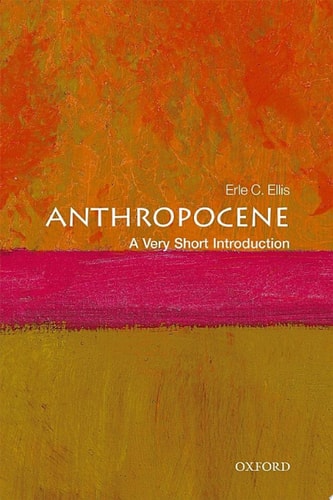
Anthropocene: A Very Short Introduction
0
0
As an Amazon Associate and affiliate partner, Menrva Books earns from qualifying purchases. Learn more
Author Description
The proposal that the impact of humanity on the planet has left a distinct footprint, even on the scale of geological time, has recently gained much ground. Global climate change, shifting global cycles of the weather, widespread pollution, radioactive fallout, plastic accumulation, species invasions, the mass extinction of species - these are just some of the many indicators that we will leave a lasting record in rock, the scientific basis for recognizing new time intervals in Earth's history. The Anthropocene, as the proposed new epoch has been named, is regularly in the news. Even with such robust evidence, the proposal to formally recognize our current time as the Anthropocene remains controversial both inside and outside the scholarly world, kindling intense debates. The reason is clear. The Anthropocene represents far more than just another interval of geologic time. Instead, the Anthropocene has emerged as a powerful new narrative, a concept through which age-old questions about the meaning of nature and even the nature of humanity are being revisited and radically revised. This Very Short Introduction explains the science behind the Anthropocene and the many proposals about when to mark its beginning: the nuclear tests of the 1950s? The beginnings of agriculture? The origins of humans as a species? Erle Ellis considers the many ways that the Anthropocene's "evolving paradigm" is reshaping the sciences, stimulating the humanities, and foregrounding the politics of life on a planet transformed by humans. The Anthropocene remains a work in progress. Is this the story of an unprecedented planetary disaster? Or of newfound wisdom and redemption? Ellis offers an insightful discussion of our role in shaping the planet, and how this will influence our future on many fronts. ABOUT THE SERIES: The Very Short Introductions series from Oxford University Press contains hundreds of titles in almost every subject area. These pocket-sized books are the perfect way to get ahead in a new subject quickly. Our expert authors combine facts, analysis, perspective, new ideas, and enthusiasm to make interesting and challenging topics highly readable.
Menrva's Summary
THE THESIS
This book investigates the scientific, philosophical, and political implications of the Anthropocene as a proposed new geological epoch defined by human impact on the Earth. Erle C. Ellis, a professor of geography and environmental systems, synthesizes geological evidence with social science to examine how human activity has fundamentally altered planetary systems. He argues that the Anthropocene is not merely a technical geological classification but a transformative narrative that challenges traditional understandings of nature and human identity.
THE SCOPE MAP
What You Will Find
- Scientific indicators of human impact including radioactive fallout, plastic accumulation, and mass extinction.
- Analysis of competing proposals for the chronological start of the epoch, ranging from early agriculture to the mid-20th century nuclear age.
- Examination of the Anthropocene as a framework for interdisciplinary discourse across the sciences and humanities.
Scope Limits
- The text does not provide an exhaustive technical manual for geological stratigraphy.
- It does not offer a definitive policy roadmap for climate mitigation, focusing instead on the conceptual shift of the epoch.
THE AUTHORITY PERSPECTIVE
Experts and readers frequently note the accessibility of this text, praising its ability to distill complex geological and environmental debates into a concise format. It is widely regarded as a foundational entry point for students and general readers seeking to understand the multifaceted implications of the Anthropocene concept.
Page Count:
208
Publication Date:
2018-01-01
Publisher:
OUP Oxford
ISBN-10:
0192511394
ISBN-13:
9780192511393
Science
Non-Fiction
Philosophy
Nature
Human ecology
Geology
Earth Science
Anthropology
Earth Sciences
Community Tags
Other Editions(2)
Similar Books






Reader Comments
Share Your Thoughts
No comments yet. Be the first to share your thoughts!