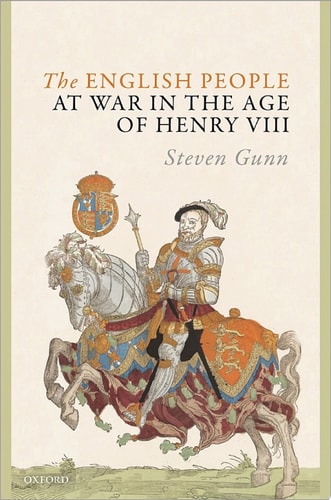
The English People at War in the Age of Henry VIII
0
0
As an Amazon Associate and affiliate partner, Menrva Books earns from qualifying purchases. Learn more
Author Description
Henry VIII fought many wars, against the French and Scots, against rebels in England and the Gaelic lords of Ireland, even against his traditional allies in the Low Countries. But how much did these wars really affect his subjects? And what role did Henry's reign play in the long-term transformation of England's military capabilities? The English People at War in the Age of Henry VIII searches for the answers to these questions in parish and borough account books, wills and memoirs, buildings and paintings, letters from Henry's captains, and the notes readers wrote in their printed history books. It looks back from Henry's reign to that of his grandfather, Edward IV, who in 1475 invaded France in the afterglow of the Hundred Years War, and forwards to that of Henry's daughter Elizabeth, who was trying by the 1570s to shape a trained militia and a powerful navy to defend England in a Europe increasingly polarised by religion. War, it shows, marked Henry's England at every turn: in the news and prophecies people discussed, in the money towns and villages spent on armour, guns, fortifications, and warning beacons, in the way noblemen used their power. War disturbed economic life, made men buy weapons and learn how to use them, and shaped people's attitudes to the king and to national history. War mobilised a high proportion of the English population and conditioned their relationships with the French and Scots, the Welsh and the Irish. War should be recognised as one of the defining features of life in the England of Henry VIII.
Menrva's Summary
THE THESIS
This work investigates the extent to which frequent warfare during the reign of Henry VIII fundamentally altered the daily lives, economic structures, and national identity of the English people. Professor Steven Gunn, a specialist in Tudor history, utilizes a broad array of primary sources—ranging from parish account books and personal wills to military correspondence and contemporary marginalia—to construct his argument. He posits that war was not merely a royal pursuit but a pervasive force that mobilized the population and reshaped social relationships across the sixteenth century.
THE SCOPE MAP
What You Will Find
- Analysis of military mobilization across various social strata including towns, villages, and the nobility.
- Examination of economic impacts, including expenditures on fortifications, weaponry, and warning systems.
- Longitudinal study spanning from the reign of Edward IV to the later years of Elizabeth I.
- Integration of diverse primary source evidence such as memoirs, letters, and local administrative records.
Scope Limits
- The study does not focus on the tactical or strategic details of specific battles.
- The analysis is geographically constrained to the English experience rather than a comprehensive military history of the European continent.
THE AUTHORITY PERSPECTIVE
Historians and scholars of the Tudor period frequently cite this work for its meticulous use of local administrative records to ground high-level political history in the lived experience of the populace. Experts highlight the text as a significant contribution to understanding the social and economic pressures of early modern state formation.
Page Count:
313
Publication Date:
2018-01-01
Publisher:
OUP Oxford
ISBN-10:
0192523899
ISBN-13:
9780192523891
History
War
Military History
British History
European History
Tudor History
History of the Americas
Great Britain
Social History
Community Tags
Similar Books