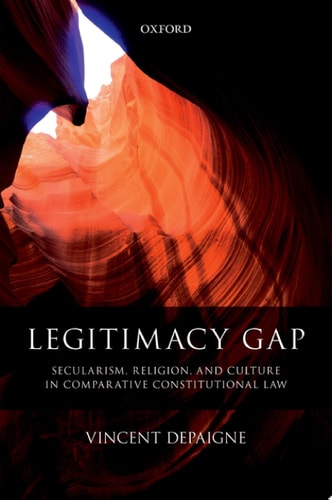
Legitimacy Gap
0
0
As an Amazon Associate and affiliate partner, Menrva Books earns from qualifying purchases. Learn more
Author Description
This Book Provides An Account And Explanation Of A Fundamental Dilemma Facing Secular States: The 'legitimacy Gap' Left By The Withdrawal Of Religion As A Source Of Legitimacy. Legitimacy Represents A Particular Problem For The Secular State. The 'secular' In All Its Manifestations Is Very Much Linked To The Historical Rise Of The Modern State. It Should Not Be Seen As A Category That Separates Culture And Religion From Politics, But Rather As One That Links These Different Dimensions. In The First Part Of The Book, Depaigne Explains How Modern Constitutional Law Has Moved Away From A 'substantive' Legitimacy, Based In Particular On Natural Law, Towards A 'procedural' Legitimacy Based On Popular Sovereignty And Human Rights. Depaigne Examines Three Case Studies Of Constitutional Responses To Legitimacy Challenges Which Articulate The Three Main Sources Of 'procedural' Legitimacy (people, Rights, And Culture) In Different Ways: The 'neutral Model' (constitutions Based On The 'displacement Of Culture'); The 'multicultural Model' (constitutions Based On Diversity And Pluralism); And The 'asymmetric Model' (constitutions Based On Tradition). Even If Secularization Can Be Considered European In Its Origin, It Is Best Seen Today As A Global Phenomenon, Which Needs To Be Approached By Taking Into Account The Particular Cultural Dimension In Which It Is Rooted. Depaigne's Detailed Study Shows How Secularization Has Moved Either Towards 'nationalization' Linked To A Particular National Identity (as In France And, To Some Extent, In India)-or Towards 'de-secularization', Whereby Secularism Is Displaced By Particular Cultural Norms, As In Malaysia.
Menrva's Summary
THE THESIS
This book investigates the fundamental legitimacy crisis facing secular states following the decline of religion as a primary source of political authority. Vincent Depaigne, an expert in constitutional law, analyzes how modern states have transitioned from substantive legitimacy rooted in natural law to procedural legitimacy based on popular sovereignty and human rights. He argues that secularism is not a neutral separation of church and state, but a complex framework that integrates culture, politics, and religion in distinct ways.
THE SCOPE MAP
What You Will Find
- A comparative analysis of three constitutional models: the neutral model, the multicultural model, and the asymmetric model.
- An examination of the shift from substantive to procedural legitimacy in modern constitutional law.
- Case studies focusing on the nationalization of secularism in France and India, and de-secularization trends in Malaysia.
Scope Limits
- The text does not provide an exhaustive history of all secular states globally.
- It does not offer prescriptive policy solutions for resolving legitimacy gaps in developing democracies.
THE AUTHORITY PERSPECTIVE
Scholars and legal experts recognize this work as a rigorous contribution to the study of comparative constitutionalism and the sociology of secular states. Readers frequently note the academic density of the prose, which is best suited for those with a background in political theory or legal history.
Page Count:
256
Publication Date:
2017-01-01
Publisher:
Oxford University Press
ISBN-10:
0192528270
ISBN-13:
9780192528278
Constitutional Law
Secularism
Sociology of Religion
Political Philosophy
Community Tags
Similar Books