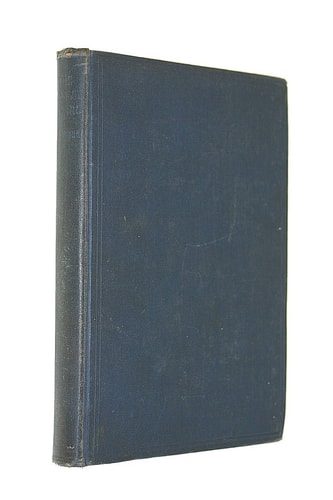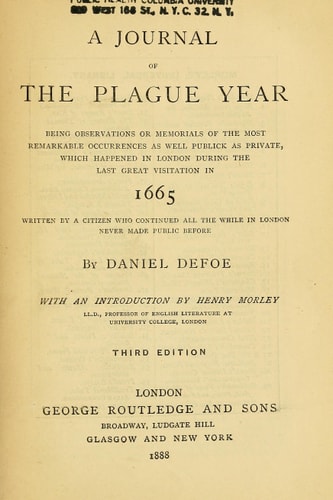
A Journal of the Plague Year: Being Observations or Memorialals of the Most Remarkable Occurrences, as Well Publick as Private, Which Happened in London During the Last Great Visitation in 1665
0
0
As an Amazon Associate and affiliate partner, Menrva Books earns from qualifying purchases. Learn more
Author Description
A Journal of the Plague Year is a novel by Daniel Defoe, first published in March 1722. This novel is an account of one man's experiences of the year 1665, in which the Great Plague or the bubonic plague struck the city of London. The book is told somewhat chronologically, though without sections or chapter headings. Presented as an eyewitness account of the events at the time, it was written in the years just prior to the book's first publication in March 1722. Defoe was only five years old in 1665, and the book itself was published under the initials H. F. and is probably based on the journals of Defoe's uncle, Henry Foe. In the book, Defoe goes to great pains to achieve an effect of verisimilitude, identifying specific neighborhoods, streets, and even houses in which events took place. Additionally, it provides tables of casualty figures and discusses the credibility of various accounts and anecdotes received by the narrator. The novel is often compared to the actual, contemporary accounts of the plague in the diary of Samuel Pepys. Defoe's account, which appears to include much research, is far more systematic and detailed than Pepys's first-person account. Defoe's account may also be compared to the description of the plague in Alessandro Manzoni's The Betrothed (orig. Italian: I Promessi Sposi).
Menrva's Summary
THE PULSE
A man navigates the harrowing social and physical collapse of London during the 1665 Great Plague, documenting the disintegration of order within the city. Through the eyes of the narrator, H.F., the reader observes the implementation of quarantine measures, the panic of the populace, and the grim realities of mass mortality. The narrative functions as a pseudo-historical record, utilizing a first-person perspective to maintain a sense of immediate, ground-level observation. The protagonist must balance his desire for self-preservation with the necessity of witnessing the city's transformation under the weight of the bubonic plague.
INSIDE THE PAGES
- First-person eyewitness narrative style
- Absence of formal chapter headings or sections
- Inclusion of statistical tables and casualty data
- Precise geographical mapping of London streets and neighborhoods
- Integration of anecdotal reports and hearsay
- Focus on the administrative and social response to the epidemic
- Verisimilitude achieved through meticulous research
- Chronological progression of the plague's spread
THE COLLECTIVE ECHO
Discussion often centers on the effectiveness of the narrator's detached, journalistic tone in conveying the scale of the tragedy. Readers frequently highlight the contrast between the book's clinical, data-driven approach and the visceral, human suffering depicted in the streets. Critics often note that while the work is technically fiction, its commitment to historical accuracy and research makes it a primary reference point for understanding the period. The lack of traditional narrative structure is frequently cited as a stylistic choice that reinforces the chaotic nature of the plague itself. Many readers appreciate the balance between the narrator's personal reflections and the broader social commentary on human behavior during times of crisis.
Page Count:
344
Publication Date:
1969-01-01
Publisher:
Oxford University Press
ISBN-10:
0192553240
ISBN-13:
9780192553249
Historical Fiction
Classic Literature
London History
Plague
18th century
Epidemic Fiction
Community Tags
Similar Books