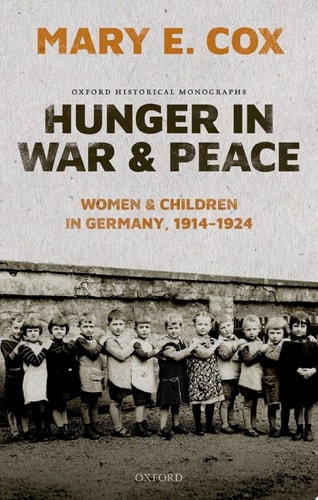
Hunger in War and Peace: Women and Children in Germany, 1914-1924
0
0
As an Amazon Associate and affiliate partner, Menrva Books earns from qualifying purchases. Learn more
Author Description
At the outbreak of the First World War, Great Britain quickly took steps to initiate a naval blockade against Germany. In addition to military goods and other contraband, foodstuffs and fertilizer were also added to the list of forbidden exports to Germany. As the grip of the Blockade strengthened, Germans complained that civilians-particularly women and children-were going hungry because of it. The impact of the blockade on non-combatants was especially fraught during the eight month period of the Armistice when the blockade remained in force. Even though fighting had stopped, German civilians wondered how they would go through another winter of hunger. The issue became internationalised as civic leaders across the country wrote books, pamphlets, and articles about their distress, and begged for someone to step in and relieve German women and children with food aid. Their pleas were answered with an outpouring of generosity from across the world. Some have argued, then and since, that these outcries were based on gross exaggerations based more on political need rather than actual want. This book examines what the actual nutritional statuses of women and children in Germany were during and following the War. Mary Cox uses detailed height and weight data for over 600,000 German children to show the true measure of overall deprivation, and to gauge infant recovery.
Menrva's Summary
THE THESIS
This book investigates the actual nutritional status of German women and children during and after the First World War to determine the validity of contemporary claims regarding widespread starvation caused by the Allied naval blockade. Mary Elisabeth Cox, a historian specializing in economic and social history, utilizes a massive dataset of anthropometric measurements to move beyond political rhetoric. By analyzing the physical development of the population, she provides a rigorous empirical framework to assess the severity of deprivation and the subsequent recovery of German civilians during the Armistice period.
THE SCOPE MAP
What You Will Find
- Analysis of the Allied naval blockade's impact on German food security between 1914 and 1924.
- Quantitative assessment of nutritional health using height and weight data for over 600,000 children.
- Examination of the international humanitarian response and the role of food aid.
Scope Limits
- The study focuses primarily on the civilian experience in Germany and does not provide a comprehensive military history of the blockade.
- The analysis is restricted to the specific timeframe of 1914 to 1924.
THE AUTHORITY PERSPECTIVE
Historians and scholars of the First World War recognize this work as a significant contribution to the study of the home front and the long-term effects of economic warfare. Readers frequently note the academic density of the prose and the impressive scale of the statistical evidence presented by the author.
Page Count:
401
Publication Date:
2019-01-01
Publisher:
OUP Oxford
ISBN-10:
019255185X
ISBN-13:
9780192551856
History
European History
World War
Social History
Economic History
Modern History
Community Tags
Similar Books