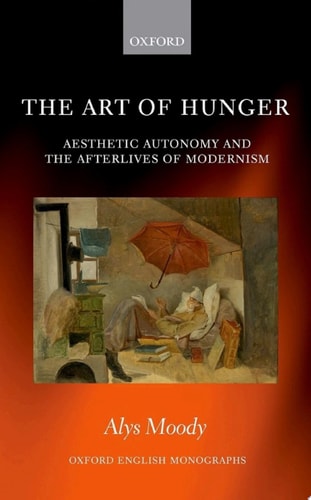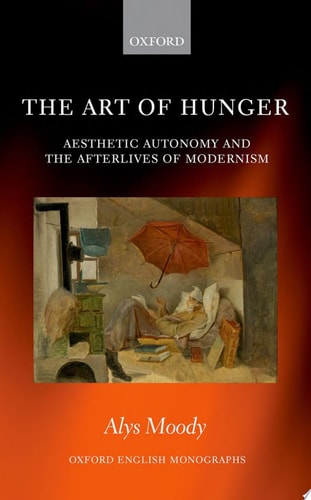
The Art of Hunger: Aesthetic Autonomy and the Afterlives of Modernism
0
0
As an Amazon Associate and affiliate partner, Menrva Books earns from qualifying purchases. Learn more
Author Description
Hunger Is One Of The Governing Metaphors For Literature In The Late Nineteenth And Twentieth Centuries. Beginning In The Mid-nineteenth Century, Writers And Critics Repeatedly Describe Writing As A Process Of Starvation, As In The Familiar Type Of The Starving Artist, And High Art As The Rejection Of 'culinary' Pleasures. The Art Of Hunger: Aesthetic Autonomy And The Afterlives Of Modernism Argues That This Metaphor Offers A Way Of Describing The Contradictions Of Aesthetic Autonomy In Modernist Literature And Its Late-twentieth-century Heirs. This Book Traces The Emergence Of A Tradition Of Writing It Calls The 'art Of Hunger', From The Origins Of Modernism To The End Of The Twentieth Century. It Focuses Particularly On Three Authors Who Redeploy The Modernist Art Of Hunger As A Response To Key Moments In The History Of Modernist Aesthetic Autonomy's Delegitimization: Samuel Beckett In Post-vichy France; Paul Auster In Post-1968 Paris And New York; And J. M. Coetzee In Late Apartheid South Africa. Combining Historical Analysis Of These Literary Fields With Close Readings Of Individual Texts, And Drawing Extensively On New Archival Research, This Book Offers A Counter-history Of Modernism's Post-world War Ii Reception And A New Theory Of Aesthetic Autonomy As A Practice Of Unfreedom.
Menrva's Summary
THE THESIS
This book investigates how the metaphor of hunger functions as a central framework for understanding the contradictions of aesthetic autonomy in modernist and late-twentieth-century literature. Alys Moody, a scholar of modernism, utilizes archival research and historical analysis to argue that the 'art of hunger' serves as a specific mode of literary production. By examining the work of Samuel Beckett, Paul Auster, and J. M. Coetzee, the author posits that aesthetic autonomy is not merely a pursuit of freedom but a complex practice of unfreedom within specific political and historical contexts.
THE SCOPE MAP
What You Will Find
- A historical analysis of the 'starving artist' trope from the nineteenth century through the twentieth century.
- A theoretical framework defining the 'art of hunger' as a response to the delegitimization of aesthetic autonomy.
- Close readings of key texts by Samuel Beckett, Paul Auster, and J. M. Coetzee.
- New archival research regarding the post-World War II reception of modernism.
Scope Limits
- The study focuses primarily on the three named authors and does not provide an exhaustive survey of all modernist writers.
- The analysis is restricted to the period between the origins of modernism and the end of the twentieth century.
THE AUTHORITY PERSPECTIVE
Scholars in the field of modernist studies recognize this work as a significant contribution to the understanding of aesthetic autonomy and its political implications. Readers frequently note the academic density of the prose and the rigor of the author's archival methodology.
Page Count:
256
Publication Date:
2018-01-01
Publisher:
Oxford University Press
ISBN-10:
0192564064
ISBN-13:
9780192564061
Modernism
Literature History
Literary Criticism
Aesthetics
Literary theory