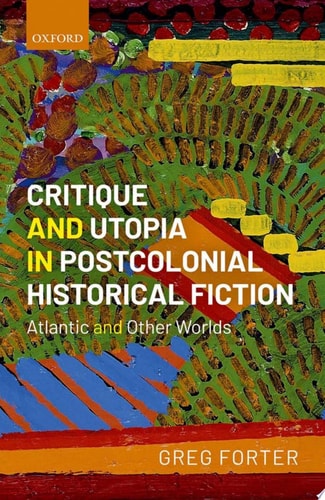
Critique and Utopia in Postcolonial Historical Fiction
0
0
As an Amazon Associate and affiliate partner, Menrva Books earns from qualifying purchases. Learn more
Author Description
This bold and ambitious volume argues that postcolonial historical fiction offers readers valuable resources for thinking about history and the relationship between past and present. It shows how the genre's treatment of colonialism illustrates continuities between the colonial era and our own and how the genre distils from our colonial pasts the evanescent, utopian intimations of a properly postcolonial future. Critique and Utopia in Postcolonial Historical Fiction arrives at these insights by juxtaposing novels from the Atlantic world with books from the Indian subcontinent. Attending to the links across these regions, the volume develops luminous readings of novels by Patrick Chamoiseau, J. G. Farrell, Amitav Ghosh, Marlon James, Hari Kunzru, Toni Morrison, Marlene van Niekerk, Arundhati Roy, Kamila Shamsie, and Barry Unsworth. It shows how these works not only transform our understanding of the colonial past and the futures that might issue from it, but also contribute to pressing debates in postcolonial theory—debates about the politics of literary forms, the links between cycles of capital accumulation and the emergence of new genres, the meaning of 'working through' traumas in the postcolonial context, the relationship between colonial and panoptical power, the continued salience of hybridity and mimicry for the study of colonialism, and the tension between national liberation struggles and transnational forms of solidarity. Beautifully written and meticulously theorized, Critique and Utopia in Postcolonial Historical Fiction will be of interest to students of world literature, Marxist critics, postcolonial theorists, and thinkers of the utopian.
Menrva's Summary
THE THESIS
How does postcolonial historical fiction function as a critical tool for analyzing the continuity between colonial history and contemporary political realities? Greg Forter, a scholar of postcolonial literature and theory, examines how the genre utilizes historical narratives to identify utopian possibilities within the aftermath of colonial trauma. By synthesizing Marxist critique with postcolonial analysis, the author argues that these novels provide a framework for understanding the structural links between past colonial power and current global capital accumulation.
THE SCOPE MAP
What You Will Find
- Comparative analysis of novels from the Atlantic world and the Indian subcontinent.
- Theoretical exploration of literary form, hybridity, and mimicry in postcolonial contexts.
- Case studies of works by authors including Toni Morrison, Amitav Ghosh, Arundhati Roy, and Marlon James.
Scope Limits
- The analysis is restricted to specific postcolonial historical novels and does not provide a comprehensive survey of all postcolonial literature.
- The text focuses primarily on theoretical and political dimensions rather than providing a general history of the genre.
THE AUTHORITY PERSPECTIVE
Scholars and students of postcolonial theory frequently note the high level of academic rigor and theoretical density present in Forter's analysis. It is widely regarded as a significant contribution to the intersection of Marxist literary criticism and postcolonial studies.
Page Count:
256
Publication Date:
2019-01-01
Publisher:
Oxford University Press
ISBN-10:
0192566180
ISBN-13:
9780192566188
Historical Fiction
World Literature
Marxist Theory
Literary Criticism
Political Theory
Community Tags
Other Editions(2)

Similar Books