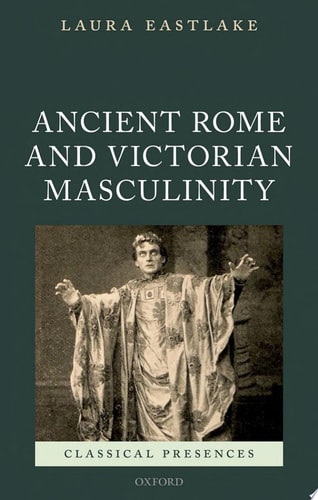
Ancient Rome and Victorian Masculinity
0
0
As an Amazon Associate and affiliate partner, Menrva Books earns from qualifying purchases. Learn more
Author Description
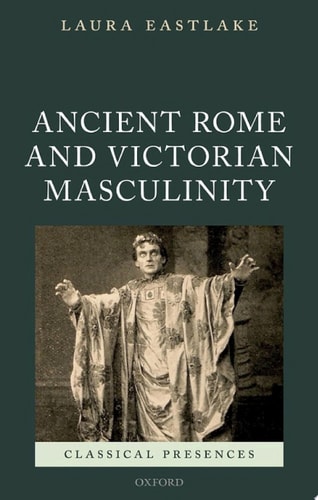
Ancient Rome and Victorian Masculinity examines Victorian receptions of ancient Rome, with a specific focus on how those receptions were deployed to create useable models of masculinity. Romans in Victorian literature are at once pagan persecutors, pious statesmen, pleasure-seeking decadents, and heroes of empire, and these manifold and often contradictory representations are used as vehicles equally to capture the martial virtue of Wellington and to condemn the deviance and degeneracy of Oscar Wilde. In the works of Thomas Macaulay, Wilkie Collins, Anthony Trollope, H. Rider Haggard, and Rudyard Kipling, among others, Rome emerges as a contested space with an array of possible scripts and signifiers which can be used to frame masculine ideals, or to vilify perceived deviance from those ideals, though with a value and significance often very different to ancient Greek models. Sitting at the intersection of reception studies, gender studies, and interdisciplinary literary and cultural studies across discourses ranging from education and politics, this volume offers the first comprehensive examination of the importance of ancient Rome as a cultural touchstone for nineteenth-century manliness and Victorian codifications of masculinity.
Menrva's Summary
THE THESIS
This work investigates how Victorian writers utilized the cultural legacy of ancient Rome to construct, define, and challenge contemporary models of masculinity. Laura Eastlake, a scholar specializing in nineteenth-century literature and classical reception, analyzes a diverse range of texts to demonstrate how Roman archetypes served as flexible tools for social commentary. By examining the tension between the perceived virtues and vices of the Roman past, the author argues that Rome functioned as a primary site for negotiating the complexities of Victorian gender identity.
THE SCOPE MAP
What You Will Find
- Analysis of Roman archetypes including the statesman, the decadent, and the imperial hero.
- Examination of literary works by Thomas Macaulay, Wilkie Collins, Anthony Trollope, H. Rider Haggard, and Rudyard Kipling.
- Interdisciplinary methodology combining gender studies, reception history, and political discourse.
Scope Limits
- The study focuses specifically on Victorian-era interpretations rather than the historical reality of ancient Rome itself.
- It does not provide an exhaustive survey of all Victorian literature, focusing instead on key texts that illustrate the construction of masculine ideals.
THE AUTHORITY PERSPECTIVE
Scholars in the field of classical reception identify this text as a significant contribution to understanding how the nineteenth century engaged with antiquity to shape its own social norms. Readers frequently note the academic rigor of the prose and the depth of the author's analysis regarding the intersection of gender and imperial ideology.
Page Count:
257
Publication Date:
2018-01-01
Publisher:
OUP Oxford
ISBN-10:
0192569392
ISBN-13:
9780192569394
History
Gender Studies
English
Literary Criticism
English & College Success
Classical Reception