Invalid Modernism
0
0
As an Amazon Associate and affiliate partner, Menrva Books earns from qualifying purchases. Learn more
Author Description
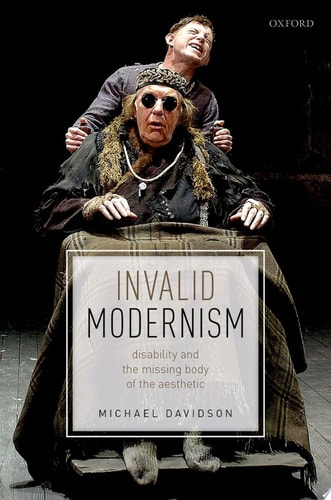
Invalid Modernism Contributes To An Intersectional Moment In Disability Studies By Looking At Modernist Aesthetics Through A 'defamiliar Body'. It Also Offers An Intersectional Understanding Of Modernism By Studying The Representation Of Physical And Cognitive Difference During A Period Marked By Progressive Reforms In Health, Labor, And Welfare. Readings Of Texts By Henry James, Samuel Beckett, Virginia Woolf, William Carlos Williams, James Joyce, Djuna Barnes, Oscar Wilde, F.t. Marinetti, Jean Toomer, An Opera By Alexander Zemlinsky, And Paintings And Constructions By Dadaists And Surrealists Are Set Against The Historical Developments In Sexology, Medical Discourse, And The Pseudo-sciences Of Eugenics And Anthropometry. Modernist Works Are Well Known For Challenging Formal Features Of Narration And Representation, But It Is Seldom Observed That This Challenge Has Often Been Enabled By Figures Of Shell-shocked Veterans, Tubercular Heroines, Blind Soothsayers, Invalid Aesthetes, And Neurasthenic Women. Such Figures Complicate An Aesthetics Of Autonomy By Which Modernism Is Often Understood. Since Its Evolution In The Eighteenth Century, Aesthetics Has Been Seen In Terms Of Judgments Based On Detached Appreciation. What Begins As A Highly Privative, Sensate Response To An Object Or Natural Formation Results In A Disinterested Judgment About The Value Of That Response. By Looking At Modernist Aesthetics Through A Disability Optic, Invalid Modernism Attempts To Restore The Missing Body To Aesthetics By Disclosing A Structure Of Feeling Around Dramatic Changes In Modernity. These Changes Are Registered On And Through The Bodies And Minds Of Figures Considered In Medical Discourse Of The Period As 'invalid' Citizens And Subjects.
Menrva's Summary
THE THESIS
This work investigates how the representation of physical and cognitive difference within modernist literature and art challenges traditional aesthetic theories of autonomy. Michael Davidson, a scholar in American literature and disability studies, utilizes a framework that juxtaposes canonical modernist texts against historical medical discourses, eugenics, and social reform movements of the early twentieth century. He argues that the 'defamiliar body' serves as a critical lens for understanding how modernity reshaped the relationship between the human subject and aesthetic judgment.
THE SCOPE MAP
What You Will Find
- Analysis of works by Henry James, Samuel Beckett, Virginia Woolf, William Carlos Williams, James Joyce, Djuna Barnes, Oscar Wilde, F.T. Marinetti, and Jean Toomer.
- Examination of Dadaist and Surrealist visual art and constructions.
- Integration of historical contexts including sexology, medical discourse, eugenics, and anthropometry.
Scope Limits
- The study focuses primarily on Western modernist aesthetics and does not provide an exhaustive survey of global modernist movements.
- It does not offer a comprehensive medical history of the period, but rather uses medical discourse to interpret literary and artistic representations.
THE AUTHORITY PERSPECTIVE
Scholars in the field of disability studies and modernist literature identify this text as a significant contribution to the intersectional analysis of aesthetic theory. Readers frequently note the academic density of the prose, which requires a foundational understanding of both modernist literary history and critical theory to fully engage with the author's arguments.
Page Count:
224
Publication Date:
2019-01-01
Publisher:
Oxford University Press
ISBN-10:
019256918X
ISBN-13:
9780192569189
Aesthetics
Modernism
Literary Criticism
Cultural History
Community Tags
Similar Books