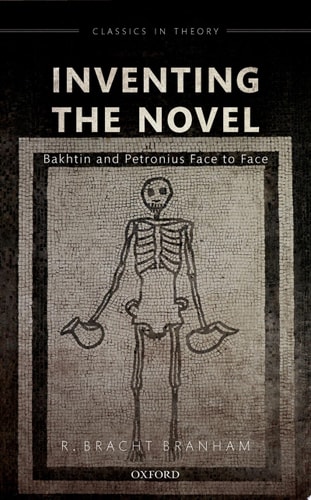
Inventing the Novel
0
0
As an Amazon Associate and affiliate partner, Menrva Books earns from qualifying purchases. Learn more
Author Description
Inventing The Novel Uses The Work Of The Russian Philosopher Mikhail Bakhtin (1895-1975) To Explore The Ancient Origins Of The Modern Novel. The Analysis Focuses On One Of The Most Elusive Works Of Classical Antiquity, The Satyrica, Written By Nero's Courtier, Petronius Arbiter (whose Singular Suicide, Described By Tacitus, Is As Famous As His Novel). Petronius Was The Most Lauded Ancient Novelist Of The Twentieth Century And The Satyrica Served As The Original Model For F. Scott Fitzgerald's The Great Gatsby (1925), As Well As Providing The Epigraph For T. S. Eliot's The Waste Land (1922), And The Basis For Fellini Satyricon (1969). Bakhtin's Work On The Novel Was Deeply Informed By His Philosophical Views: If, As A Phenomenologist, He Is A Philosopher Of Consciousness, As A Student Of The Novel, He Is A Philosopher Of The History Of Consciousness, And It Is The Role Of The Novel In This History That Held His Attention. This Volume Seeks To Lay Out An Argument In Four Parts That Supports Bakhtin's Sweeping Assertion That The Satyrica Plays An Immense Role In The History Of The Novel, Beginning In Chapter 1 With His Equally Striking Claim That The Novel Originates As A New Way Of Representing Time And Proceeding To The Question Of Polyphony In Petronius And The Ancient Novel.
Menrva's Summary
THE THESIS
This volume investigates the historical and philosophical origins of the modern novel by applying the theories of Mikhail Bakhtin to the Satyrica of Petronius. R. Bracht Branham, a scholar of classical literature, utilizes Bakhtin's phenomenological framework to argue that the novel represents a fundamental shift in the human perception of time and consciousness. The text systematically examines how Petronius's work functions as a foundational model for subsequent literary developments in the Western canon.
THE SCOPE MAP
What You Will Find
- A four-part analytical argument regarding the evolution of the novel form.
- Application of Bakhtin's concepts of polyphony and chronotopes to ancient texts.
- Comparative analysis linking Petronius to twentieth-century works by Fitzgerald, Eliot, and Fellini.
Scope Limits
- The analysis is restricted to the Satyrica and does not provide a comprehensive survey of all ancient prose fiction.
- The text focuses primarily on Bakhtinian theory rather than a general historical overview of Roman society.
THE AUTHORITY PERSPECTIVE
Scholars and students of classical literature frequently cite this work for its rigorous application of Bakhtinian theory to the study of ancient texts. It is widely regarded as a specialized academic resource that demands a high level of familiarity with both literary theory and classical history.
Page Count:
240
Publication Date:
2019-01-01
Publisher:
Oxford University Press
ISBN-10:
0192578219
ISBN-13:
9780192578211
Philosophy
Literature History
Ancient - Rome
Literary Criticism
Community Tags
Similar Books