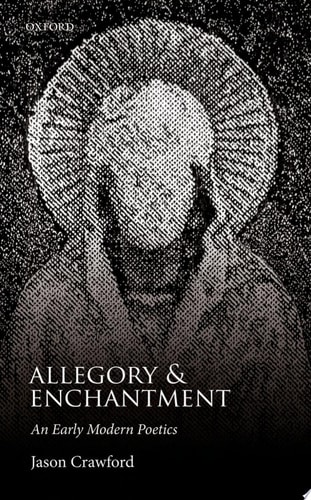
Allegory and Enchantment
0
0
As an Amazon Associate and affiliate partner, Menrva Books earns from qualifying purchases. Learn more
Author Description
What Is Modernity? Where Are Modernitys Points Of Origin? Where Are Its Boundaries? And What Lies Beyond Those Boundaries? Allegory And Enchantment Explores These Broad Questions By Considering The Work Of English Writers At The Threshold Of Modernity, And By Considering,in Particular, The Cultural Forms These Writers Want To Leave Behind. From The Fourteenth To The Seventeenth Centuries, Many English Writers Fashion Themselves As Engaged In Breaking Away From An Array Of Old Idols: Magic, Superstition, Tradition, The Sacramental, The Medieval. Many Of These Writers Persistently Use Metaphors Of Disenchantment, Of Awakening From A Broken Spell, To Describe Their Self-consciously Modern Orientation Toward A Medieval Past. And Many Of Them Associate That Repudiated Past With The Dynamics And Conventions Of Allegory. In The Hands Of The Major English Practitioners Of Allegorical Narrativewilliam Langland, John Skelton, Edmund Spenser, And John Bunyanallegory Shows Signs Of Strain And Disintegration. The Work Of These Writers Seems To Suggest A Story Of Modern Emergence In Which Medieval Allegory, With Its Search For Divine Order In The Material World, Breaks Down Under The Pressure Of Modern Disenchantment. But These Four Early Modern Writers Also Make Possible Other Understandings Of Modernity. Each Of Them Turns To Allegory As A Central Organizing Principle For His Most Ambitious Poetic Projects. Each Discovers In The Ancient Forms Of Allegory A Vital, Powerful Instrument Of Disenchantment. Each Of Them, Therefore, Opens Up Surprising Possibilities: That Allegory And Modernity Are Inescapably Linked; That The Story Of Modern Emergence Is Much Older Than The Early Modern Period; And That The Things Modernity Has Tried To Repudiatethe Old Enchantmentsare Not As Alien, Or As Absent, As They Seem.
Menrva's Summary
THE THESIS
This book investigates the complex relationship between the emergence of modernity and the literary tradition of allegory in English writing from the fourteenth to the seventeenth centuries. Jason Crawford, an academic specializing in early modern literature, utilizes a historical and formalist framework to analyze how authors like Langland, Skelton, Spenser, and Bunyan navigated the transition from medieval worldviews to modern disenchantment. He argues that rather than being a relic to be discarded, allegory served as a vital instrument for these writers to articulate and process the tensions of their changing world.
THE SCOPE MAP
What You Will Find
- Analysis of major English allegorical works from the 14th to 17th centuries.
- Examination of the metaphor of disenchantment in early modern literature.
- Theoretical exploration of the link between medieval tradition and modern identity.
- Close readings of William Langland, John Skelton, Edmund Spenser, and John Bunyan.
Scope Limits
- The study focuses primarily on English literature and does not provide a comprehensive survey of continental European allegorical traditions.
- It does not attempt to define modernity in a sociological or economic sense, focusing instead on literary and cultural manifestations.
THE AUTHORITY PERSPECTIVE
Scholars in the field of early modern studies recognize this work as a nuanced contribution to the understanding of how medieval forms persisted into the modern era. Readers frequently note the academic density of the prose, which is well-suited for advanced students and researchers of literary history.
Page Count:
256
Publication Date:
2017-01-01
Publisher:
Oxford University Press
ISBN-10:
0191092118
ISBN-13:
9780191092114
Philosophy
Literary Criticism
Literature History
Early Modern
Cultural History
Community Tags
Similar Books