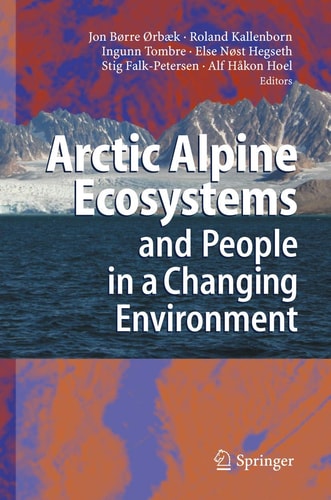
Arctic Alpine Ecosystems and People in a Changing Environment
0
0
As an Amazon Associate and affiliate partner, Menrva Books earns from qualifying purchases. Learn more
Author Description
This book addresses the significant environmental changes experienced by high latitude and high altitude ecosystems at the beginning of the 21st c- tury. Increased temperatures and precipitation, reduction in sea ice and glacier ice, the increased levels of UV-radiation and the long-range tra- ported contaminants in arctic and alpine regions are stress factors that challenge terrestrial and aquatic ecosystems. The large natural variation in the physical parameters of these extreme environments is a key factor in structuring the biodiversity and biotic productivity, and the effect of the new stress factors can be critical for the population structures and the - teraction between species. These changes may also have socio-economic effects if the changes affect the bio-production, which form the basis for the marine and terrestrial food chains. The book is uniquely multidisciplinary and provides examples of va- ous aspects of contemporary environmental change in arctic and alpine - gions. The 21 chapters of the book are organised under the fields of •Climate change and ecosystem response, •Long range transport of poll- ants and ecological impacts, and •UV radiation and biological effects, each also including aspects of the •Socio-economic effects of environmental change. The introductory chapter presents and explains the internal c- nection and integration of all chapters. The added value of these reviews and review-like manuscripts from different disciplines hopefully yields new information about the integrated aspects of environmental change.
Menrva's Summary
THE THESIS
This book investigates the profound environmental shifts impacting high-latitude and high-altitude ecosystems at the dawn of the 21st century. It examines how increased temperatures, altered precipitation patterns, diminishing sea and glacier ice, elevated UV radiation, and the influx of long-range transported contaminants act as critical stress factors for both terrestrial and aquatic life. The inherent variability of these extreme environments shapes biodiversity and productivity, making them particularly vulnerable to new stressors that can critically affect population structures and interspecies interactions. Furthermore, these ecological changes carry significant socio-economic implications, especially when they disrupt bio-production, the foundation of marine and terrestrial food webs.
THE SCOPE MAP
- Analysis of climate change impacts on arctic and alpine ecosystems.
- Examination of long-range transport of pollutants and their ecological consequences.
- Assessment of UV radiation effects on biological systems in extreme environments.
- Exploration of the socio-economic ramifications of environmental change in these regions.
- Multidisciplinary perspectives integrating various scientific disciplines.
- Organization of content into sections on Climate Change, Pollutants, and UV Radiation, with cross-cutting socio-economic aspects.
THE AUTHORITY PERSPECTIVE
The book is structured as a multidisciplinary review, integrating research from various fields to provide a comprehensive overview of contemporary environmental changes in arctic and alpine regions. Its strength lies in connecting climate change, pollution, UV radiation, and their socio-economic effects, offering a holistic perspective on these complex issues. The organization into thematic sections, each addressing specific stress factors and their biological and societal impacts, facilitates a thorough understanding of the interconnectedness of these environmental challenges. The collection of review-like manuscripts aims to synthesize current knowledge and highlight integrated aspects of environmental change.
Page Count:
434
Publication Date:
2010-10-14
Publisher:
Springer Berlin Heidelberg
ISBN-10:
3642080146
ISBN-13:
9783642080142
Non-Fiction
Science
Pollution
Arctic Studies
Ecology
Biodiversity
Alpine Studies
Climate Change
Community Tags
Other Editions(2)
Similar Books


Reader Comments
Share Your Thoughts
No comments yet. Be the first to share your thoughts!